 trailers.fm
trailers.fm / Guide / 1890s
Films from the 1890s
All 45
- 1
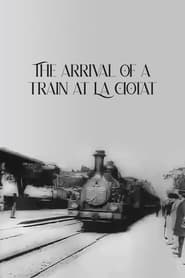
The Arrival of a Train at La Ciotat
A group of people are standing along the platform of a railway station in La Ciotat, waiting for a train. One is seen coming, at some distance, and eventually stops at the platform. Doors of the railway-cars open and attendants help passeng
- 2
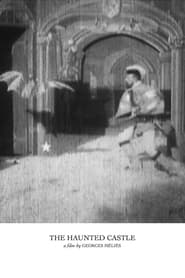
Le manoir du diable
In a medieval castle, a dark magician thought to be Mephistopheles conjures up a series of bizarre creatures and events in order to torment a pair of interloping cavaliers.
- 3
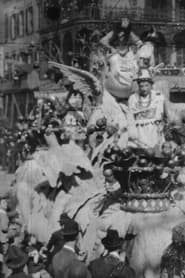
Mardi Gras Carnival
The film is part of Eye Filmmuseum’s Mutoscope and Biograph Collection. This collection consists of about 200 films preserved on their original 68 mm format. The digital file provided is scanned in 2022 at Eye Collection Center, from the 35 mm duplicate negative that was made in 1998. After the first analogue preservation round made 25 years ago, Eye is now undertaking the digital restoration of the Mutoscope & Biograph Collection. “Mardi Gras Carnival” became the focus of attention, thanks to its inclusion within ‘The Artistry of REX’ exhibition, that opened in the summer of 2022 at the Louisiana State Museum.
- 4
Gugusse and the Automaton
Gugusse, a clown, is both astounded and bewildered upon seeing the mechanical movements of an automaton.
- 5
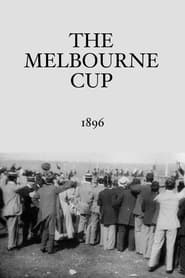
The Melbourne Cup
This film documents the 1896 Melbourne Cup horse race including footage of the crowd watching the race.
- 6
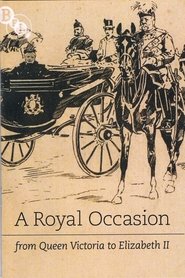
Queen Victoria's Diamond Jubilee
A series of actuality films showing the procession to mark Queen Victoria's diamond jubilee.
- 7
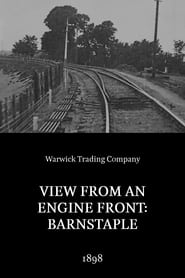
View from an Engine Front: Barnstaple
A ‘phantom ride’ taken from the front of a train passing through the Devon town of Barnstaple.
- 8
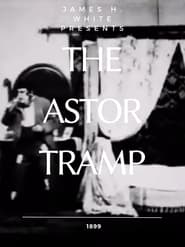
The Astor Tramp
"A side splitting subject, showing the mistaken tramp's arrival at the Wm. Waldorf Astor mansion and being discovered comfortably asleep in bed, by the lady of the house."
- 9
Maple Leaf Viewing
A reel of the Noh drama Momiji-gari, in which Danjuro Ichikawa played opposite Onoe Kikugoro V as an ogress who has disguised herself as the Princess Sarashina. Filmed by Shibata Tsunekichi in the open air on a windy day in November 1899, Danjuro would allow only the one take, so that when his fan blew away in mid-performance the scene had to stay. The film re-emerged at the Kikikan theatre in 1907 where it was a great success and inspired a wave of fiction filmmaking based on traditional Japanese narratives.
- 10
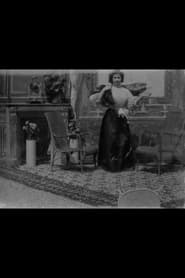
A Victorian Lady in Her Boudoir
A young woman takes off several layers of clothing.
- 11

The Morning Alarm
“This shows the Fire Department leaving headquarters for an early morning fire. The scene is remarkable for its natural effect. The opening of the engine house doors, the prancing of the horses, and even the startled expression upon the faces of the spectators are all clearly depicted.” -Edison Films, 1897. 150 ft. strip, filmed December 25, 1896 in Harrisburg, Pennsylvania.
- 12
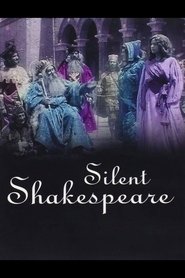
King John
Based on Shakespeare's play, Act V, Scene vii: King John is in torment, and his supporters fear that his end is near. As he writhes in agony, he is attended by Prince Henry, the Earl of Pembroke, and Robert Bigot. Prince Henry tries repeatedly to comfort his delirious father, but to no avail - John's pain is too great.
- 13

The Kiss in the Tunnel
Produced and directed by George Albert Smith, the film shows a couple sharing a brief kiss as their train passes through a tunnel. The Kiss in the Tunnel is said to mark the beginnings of narrative editing. It is in fact, two films in one, hence the 2 min length. Firstly, the G.A. Smith film here for the central cheeky scene in the carriage. The train view footage however is Cecil Hepworth's work, entitled 'View From An Engine Front - Shilla Mill Tunnel', edited into two halves in order to provide a visual narrative of the train entering the tunnel before the kiss and then leaving afterwards. More information about the filming of the phantom train ride can be found searching for the Hepworth film separately.
- 14
A Terrible Night
A man tries to get a good night's sleep, but is disturbed by a giant spider that leaps onto his bed, and a battle ensues in hilarious comic fashion.
- 15
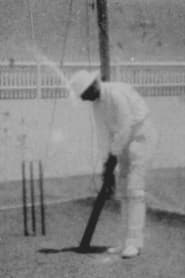
Prince Ranjitsinhji Practising Batting in the Nets
Probably the first ever cricket film: Indian cricketing royalty prepares for the first test between England and Australia at Sydney.
- 16
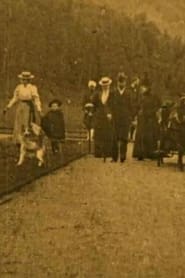
Scenes at Balmoral
Queen Victoria and family experience the new 'cinematograph process'.
- 17
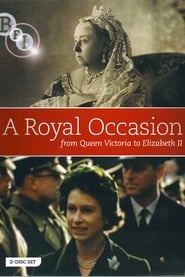
Queen Victoria's Diamond Jubilee Procession
Various parts of the procession to commemorate Queen Victoria's diamond jubilee.
- 18
Horseshoe Curve, Pennsylvania
Pennsylvania's historic Horseshoe Curve, photographed by an Edison cameraman in 1899.
- 19
View from an Engine Front: Ilfracombe
A “phantom ride” taken from the buffers of an engine on the London and South West Railway through the Ilfracombe area: the reservoirs, Morthroe, Ilfracombe Incline and station.
- 20
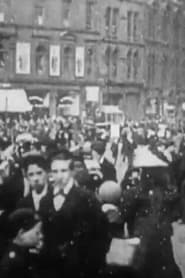
Bradford Town Hall Square
The earliest surviving footage of bustling Victorian Bradford. A girl stands centre, possibly selling something to passersby. A small brass band marches through. Tram tracks are clearly visible and a steam tram goes through the scene, heading towards the camera before passing to its right. Plenty of male bicyclists can be seen on the road weaving around the horse drawn carts. The film has no official attribution. The North East Film Archive catalogue suggests George Henderson, a famous filmmaker from the north east England whilst the catalogue entry at the BFI suggests Mitchell and Kenyon. The film was made looking towards a now demolished building north of the northwestern corner of Bradford Town Hall. The location may be at the northern end of the pedestrianised stretch of Channing Way, next to the eastern side of the Mirror Pool. Almost all the original Victorian architecture of the
- 21
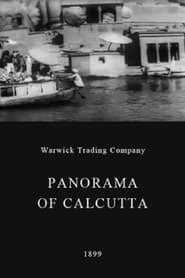
Panorama of Calcutta
One of the earliest films to be shot in India apparently shows the Calcutta ghats - or does it?
- 22
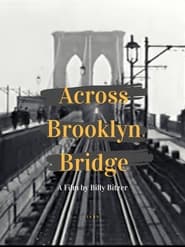
Across Brooklyn Bridge
This picture is very novel and interesting. It gives the complete trip from the station at the New York City end of the bridge to the station at the Brooklyn end, as seen from the front end of a third rail car running at high speed. The entire trip consumes three minutes of time, during which abundant opportunity is given to observe all the structural wonders of the bridge, and far distant river panorama below.
- 23
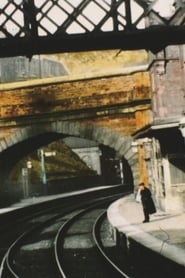
Panoramic View of Conway on the L. & N.W. Railway
A hand-colored ride along the Bangor-Conwy-Colwyn Bay railroad filmed from an express train from the London and North Western Railway; Stations, vistas and a tunnel under the Conwy Castle (misspelled in the title) in North Wales.
- 24

- 25

- 26
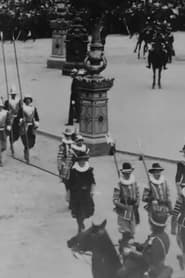
Review of the Royal Netherland Guards in the Costumes of the Middle Ages (Coronation of Wilhelmina Guard of Honor)
Parade of guards during Queen Wilhelminas coronation.
- 27
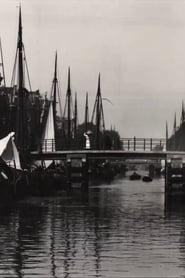
Prinsengracht
Prinsengracht is one of the main canals of Amsterdam. While on board of a ship, we'll get to see the city buildings, its bridges, and every day scenes: from people walking down the streets to carriages, other ships and so on. It's just a regular non fiction movie -hundreds alike were made showing beautiful (sometimes not so) exotic places-. But this one was particularly special to me, must have been its saddened atmosphere. Filmed by Emile Lauste (according to the information I've compiled), this man was sent over to the Netherlands by the Biograph Company to film some movies in this country (Lumière agents worked in a very similar way).
- 28

Santa Claus and the Children
Santa Claus comes down the chimney and delivers toys to the children.
- 29

The Island of Marken
In September of 1899, the French cameraman Emile Lauste visited the Netherlands for the second time that year. [...] One of the subjects that Lauste briefly filmed was children on the island of Marken. We see the children passing by in a rowboat, and dancing in a circle. The traditional costumes and the watery environment looked very exotic to foreign audiences. The footage jibed very well with the perceptions that people had of the Netherlands in those days.
- 30
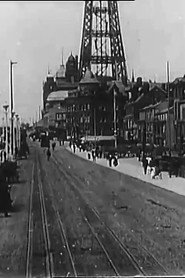
First Film of Blackpool
This silent film captures scenes of the Blackpool Tower and the tramway, showcasing the town's trams and coastline. It's a valuable piece of early cinema, offering a glimpse into Blackpool's Victorian-era landscape and transportation system.
- 31
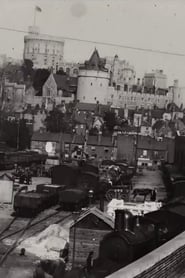
Panoramic View of Windsor Castle
Film by W.K.L. Dickson; Rounding a bend in the track, we behold Windsor Castle.
- 32
- 33
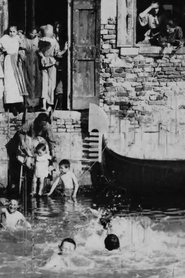
Boys Bathing: Venice
A bunch of naked boys jump and splash in the water right on one of the canals of Venice. There's even the tail end of one of the gondolas to make sure the audience doesn't mistake where this is taking place.
- 34
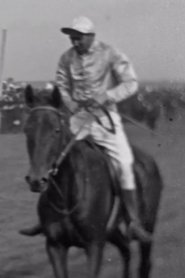
Stockton Races
Made in 1896 during the flat racing season (March-October) at Stockton Racecourse, a former horse racing venue in Thornaby-on-Tees, North Yorkshire, UK. Several horses are ridden by jockeys past the camera. Many men in flat caps from the crowd run onto the course and run past the camera at the end of the race. Two policemen follow the men.
- 35

- 36
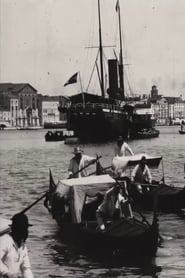
Venice, harbour scene with gondolas
Many gondolas in Venice harbour with a fishing boat in the background
- 37

- 38
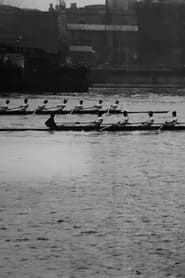
Oxford and Cambridge Boat Race
"An interesting picture of the great inter-collegiate eight-oared boat race of 1899. The picture is taken from the judge's boat, and shows the start and first part of the race."
- 39

Cheval Monté, Deux Chevaux Bais Se Suivant au Pas
Two mounted bay horses follow each other in line.
- 40

- 41
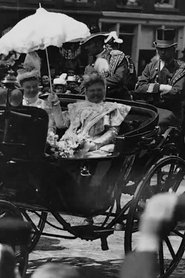
Festive visit of H. M. Queen Wilhelmina to Rotterdam
A short clip of Wilhelmina and her mother Emma in a horse-drawn carriage, receiving flowers from the crowd.
- 42
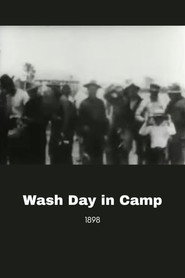
Wash Day in Camp
Representing soldiers in camp washing their clothing and a general cleaning up
- 43
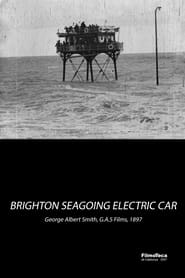
Brighton Seagoing Electric Car
A view taken from Brighton beach on the Channel coast of the transit of Magnus Volk’s amazing seagoing electric railway, long celebrated as one of the world’s more bizarre railway experiments. All aboard for “A Sea Voyage on Wheels!"
- 44
The Artist's Model
This artist's model may never work again after his ill-advised prank. While the artist isn't looking, his model cuts a hole in the painting and puts his face through it - and is decorated with a painted beard for his trouble. The battering the prankster gets is probably no less than he deserves for literally defacing a work of art...
- 45
The Bride’s First Night
Saucy comedy about a bride modestly disrobing whilst the husband peeks from behind a screen