 trailers.fm
trailers.fm / Guide / 1900s + French
French films from the 1900s
The best 100 of 242
- 1
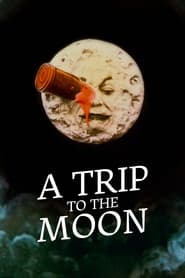
A Trip to the Moon
Professor Barbenfouillis and five of his colleagues from the Academy of Astronomy travel to the Moon aboard a rocket propelled by a giant cannon. Once on the lunar surface, the bold explorers face the many perils hidden in the caves of the
- 2

- 3
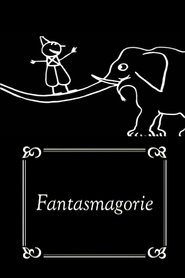
Fantasmagorie
An animated film by French auteur Émile Cohl, one of the earliest examples of hand-drawn film animation. Drawing inspiration from J. Stuart Blackton and the Incoherents of club Hydropathes, the film, with all its wild transformations, sees our protagonist materialize a movie theatre, meet an elephant and escape from jail; A morphing, stream-of-consciousness delight.
- 4

The Diabolic Tenant
A man rents an apartment and furnishes it in remarkable fashion.
- 5
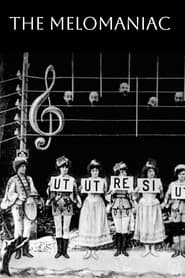
The Melomaniac
The leader of a marching band demonstrates an unusual way of writing music.
- 6
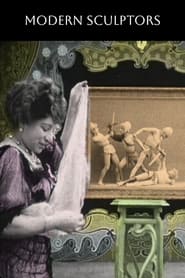
Modern Sculptors
The first scene presents before the astonished eyes of the spectators a solid piece of marble, which the minute it is placed on a table seems to take life, and one can follow a snake-like line branding on the polished face of the stone the name of the house of Pathé Frères. As soon as this stone has been engraved, as by magic, a handsome young lady appears with a huge lump of clay covered with a cloth. As soon as the cloth is removed from the soft mass it starts whirling and turning as if stricken mad, and one is asking one's self what all the contentions are going to lead to, when the vague shape of an animal not yet discernible seems to appear, and before one has time to make one's mind as to the category of brutes to which it belongs one sees the form of a remarkably well made orang-utan modelled out of the clay, who calmly smokes his pipe. Then the statue is removed by the same winni
- 7
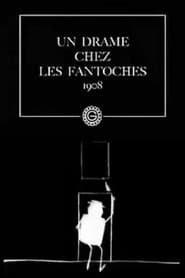
Drama at the Puppets' House
For a short comedy of rare merit this subject is unexcelled. A chalk line series of grotesque caricatures enacted in the land of puppets. A fickle maiden gets herself into numerous embarrassing complications with her host of admirers, but the artist with lightning rapidity overcomes all obstacles and brings the maiden out victorious.
- 8
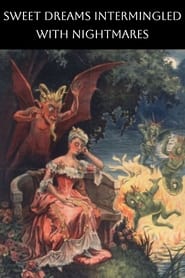
Sweet Dreams Intermingled With Nightmares
A woman falls asleep on a park bench. The Devil appears and summons an imp who takes the woman to his fantastic lair. After a nightmarish episode, the woman awakens only to promptly doze off again. Now a fairy appears who shows the woman a beautiful dreamland.
- 9
Elastic Transformation
A woman enters a room with a man. She creates a duplicate of him and changes his personality by throwing his clothes from one man to the next.
- 10

The Magic Hoop
Émile Cohl mixes live-action and stop-motion animation in this charming evocation of the power of imagination. A magician shapes his cane into a hoop with strange properties for a young girl. Costume changes and city promenades give way towards greater abstraction as the film becomes absorbed by what goes on inside the ring.
- 11
The Girl from Arles
The young hero, Frederick, is leaving his country home and going to the city to attend the bull fight, and while there he meets and woos a beautiful maiden, forgetting his own little sweetheart at home.
- 12
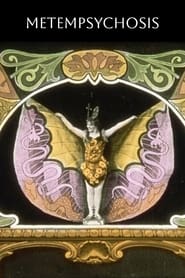
Métempsycose
In turn, the statues come to life, dancers like dolls, perform on a table, the women metamorphose from butterflies, and babies are born from giant flowers. These scenes are a series of tableaux which are beautifully incoherent, changing and diverse as in real life, where it is necessary to have a certain belief in metaphysics for the soul to be transported into a perpetual motion, migrating from one another and into the stars.
- 13
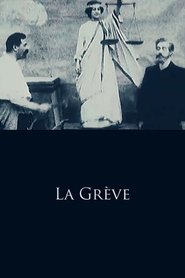
The Strike
During a strike, several workers are killed in a confrontation. The wife of one of them kills the factory owner. At her trial, the owner's son asks for mercy, knowing that his father was wrong. Because of that the wife is freed.
- 14
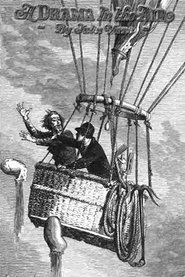
Drama in the Air
A fairly venturesome piece of filmmaking for the era: Based on the Jules Verne story, the film utilizes a dozen cuts, irised lenses, panning shots and vivid tints to weave an intrepid and exciting story.
- 15
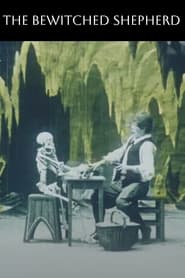
The Bewitched Shepherd
A young peasant leaves his cottage after a quarrel with his wife, and meets a witch. She takes him to a cavern, where after a series of encounters with goblins and other elusive creatures, he is presented with a choice of beautiful women of various races. Finally the witch makes his wife appear.
- 16
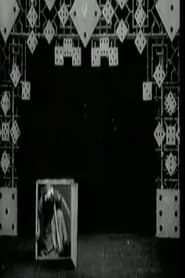
Magic Dice
This is not only a colored film of great beauty, but one showing a series of clever trick pictures in which great ingenuity on the part of the operator is exhibited.
- 17
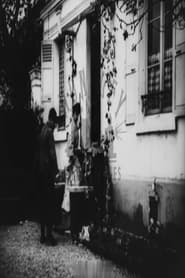
A Father's Honor
A young woman receives a message, and hurriedly leaves home. But the message was a trick to lure her into a trap, where she is assaulted and killed. When her body is found floating in the river, it is brought to her father. Once he realizes what has been done to his daughter, the father immediately sets out in an effort to extract vengeance.
- 18
The Age of the Heart
An old general is married to a young woman. She meets a young man and makes plans for a rendezvous. The general receives an anonymous letter about his wife which causes him to find the couple and seek vengeance.
- 19
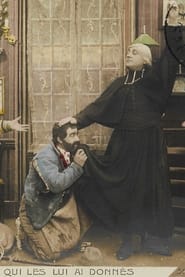
Le Chemineau
An adaptation of an episode in Victor Hugo's Les Misérables, where Jean Valjean is welcomed into the Bishop of Digne's home, and steals his silverware.
- 20
Living Flowers
Gaston Velle's 'Les Fleurs Animées' was screened by the Australian-based Corrick Family Entertainers as part of their variety act. In their advertising the Corricks described the detailed, hand-coloured production as 'The finest "Color" Film of the Twentieth Century'. Simple camera tricks create a magic fairy story in this tale of angry flowers exacting revenge on a man who has wantonly destroyed their garden.
- 21
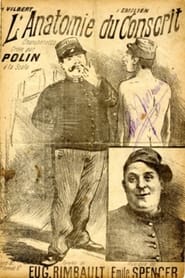
- 22
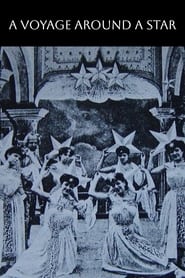
Voyage autour d’une étoile
An old astronomer has been transfixed by a star for a long time. He had but one thought: to travel to it, to declare his love for it! But how? A simple but ingenious solution-- A giant bubble. Velle remade the film for Italian studio Cines in the same year.
- 23
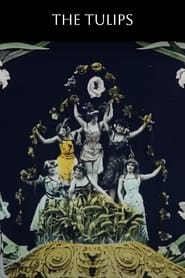
The Tulips
In a bower of giant tulips a boy and girl practice flower magic. They cause flowers and birds to open and human forms to issue therefrom, and on the black background of the wonderful garden there appear myriad flowers, in the center of each of which is a smiling feminine head. Tableaux showing pretty girl and flower effects are plentiful and the film winds up with a burst of multi-colored flame, which shoots in fiery splendor from leaves and petals.
- 24
Poor Mother
A woman loses her only child. She turns to drink and begins to hallucinate an image of her beloved child.
- 25

Whimsical People
A moon-woman shakes a Pierot costume and manifests a Pierot clown. She does this four more until there are five Pierots crowded on the ledge of the moon. They fall to the earth and dance like tops turning one by one into Columbine maidens.
- 26
William Tell
Historical legend composed of five Scenes. 1. William Tell's heroism. 2. The Plot. 3. The Apple. 4. Death of Gessler. 5. The Swiss cheer their Liberator. This popular and interesting legend takes place amidst the country life of the mountain populations. The beautiful and picturesque sites which exist in Switzerland have given us an opportunity of utilising the resources our theatre affords, and our scene-painters have been able to have a free run on their imaginations, and have completed the work by a series of magnificent scenes in the most artistic character.
- 27
The Physician of the Castle
Two criminals lure a doctor away from his home with a phony note about a child's illness. After the doctor rushes off, the criminals break into his house and menace his wife and child. By the time the doctor realizes what has happened, his family faces a desperate situation.
- 28
The Cigar Box
People magically appear and disappear from an oversized musical cigar dispenser.
- 29
Magnetized Man
A midsummer Phantasy. The man having been attacked by footpads, puts on a suit of medieval armor which has been magnetized at a dynamo by two boys. Every metallic article which he approaches flies to him, to the great consternation of many people.
- 30
- 31
The Skipping Cheese
The interior of a trolley car. A menagerie of passengers notices a foul odour, and pinpoint the source of the stench at a cheese saleswoman. The gendarmerie removes her from the trolley and drags her to the precinct.
- 32
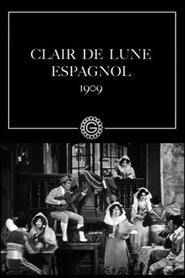
Spanish Clair de Lune
Two lovers perform a fandango dance. A jealous quarrel follows and the heart-broken swain decides to end it all. He throws himself from the window of his room, but instead of falling to his death, the anchor of a passing balloon intercepts his flight and he is taken high into the clouds. Laughing at his plight, the moon arouses the anger of the desperate lover and a battle between the two ensues.
- 33
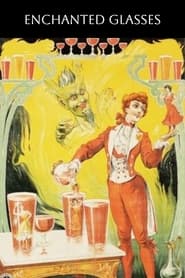
Enchanted Glasses
Devilish looking man dances with a dress in his arms. The dress stands up by itself and a woman magician appears in it. She conjures six women and then makes them disappear. She magically changes into men's clothing and lines up six boxes which begin to smoke and produce six women, whose clothing transforms from formal gowns to ballet dresses. The magician makes them disappear. She then lines up six glasses on a table, and, as she pours wine into them, a woman appears in each glass. She makes the wine go back into the container and everything on the table goes up in smoke. She transforms her clothing into a dress, then disappears, leaving the dress standing on its own. The devilish man reappears, turns the dress into torches, then disappears into smoke with the torches. (Library of Congress)
- 34
- 35
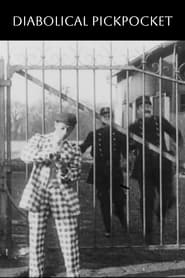
Diabolical Pickpocket
A pickpocket manages to escape the police through a series of fantastic tricks. The director in this film is unknown.
- 36
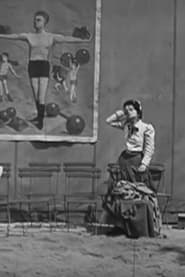
The Wrestler's Wife
A story of a desperate wife who worries about her husband, a career wrestler.
- 37
The Indian Sorcerer
A sorcerer turns a small egg into a bigger one and keeps repeating this trick until the egg is large enough to do other things including delivering children.
- 38

The Pumpkin Race
A pumpkin vendor returns with her loaded car. Two pranksters overturn the car, and what follows is a truly hilarious and eventful pumpkin hunt. (Nouveautés Cinématographiques, February 3, 1908)
- 39
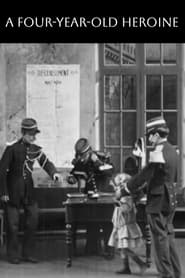
Four-Year-Old Heroine
A little girl runs away from the maid in charge of her care and, during her escapade, she will arrest two thugs, prevent a blind man from drowning, and save some drunks from being run over by a train. According to Etienne Arnaud's own notes, he filmed this short on the 18th and 19th of July, 1907. Alice Guy, who is mistakenly attributed to have directed it, had been living in the United States long before those dates.
- 40
The Boutdebois Brothers
Prodigious feats of strength by two little wooden men who leave the most sophisticated puppets far behind.
- 41
The Colonel's Account
This short film consists of a crazy old colonel being asked to entertain party guests about his exploits of daring. However, being a totally insane old coot, he runs amok acting out his war-time heroics--smashing and throwing everything in the room!
- 42
The Bee and the Rose
The Queen Bee and her entourage appear dancing around the hive. Suddenly, a splendid rose rises in a bed of flowers, comes to life and flies off with the Queen Bee. Then the Queen of Roses returns to her original state. The Queen Bee is saddened by the loss of her beautiful companion and, after inhaling the fragrance of the roses, falls asleep. A spider spins its web over her and traps her, but a swarm of bees quickly arrives and frees their Queen. The final scene is a graceful ballet featuring charming ballerinas portraying roses and bees.
- 43
The Rajah's Casket
An evil magician visits the rajah's palace to perform his magic tricks, but he also steals a valuable casket making his getaway aboard a dragon. The rajah pursues the wizard to a subterranean cavern.
- 44
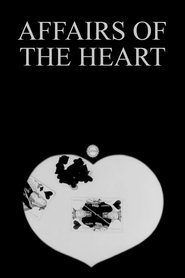
Affairs of the Heart
A near-abstract animation telling a simple romantic story through drawings almost entirely composed of heart shapes.
- 45

Le Coucher de la mariée
On their wedding night, the newlyweds are ready to go to bed with the ceremony of taking off their clothes, the bride, and the groom wanting to see what he has not seen yet.
- 46
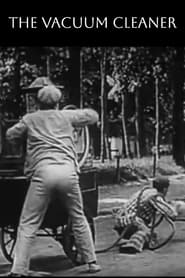
The Vacuum Cleaner
In this funny picture we see the vacuum cleaner, the modern dust eradicator, performing some very droll tricks. As soon as the fellow turns on the air then the fun begins. It is all accomplished through some clever trick photography. First we see two attendants start out to do a cleaning job, and while they stop to take some refreshments, two men, who happen to be passing, take the machine and start down the sheet to have some fun. They meet a woman with a dog on a leash, and at a turn of the wheel, the dog and its mistress are quickly drawn into the spout. Next a nursemaid comes sauntering down the street, and when they level the spout at her she meets the same fate. A girl and her lover are the next to disappear off the face of the earth, and still they go along, looking for more victims. (Moving Picture World)
- 47
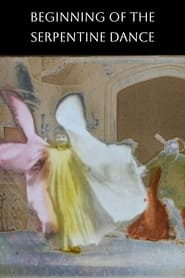
Beginning of the Serpentine Dance
In a living room, four contemporary couples from the time the film was shot dance a waltz under the direction of a violinist (Linder). They begin a minuet and their costumes change in a sudden. A man enters and seems interested in what he sees, casts a spell and everything disappears. Transforming himself into the devil, the visitor takes the violinist with him to hell, where he creates a large piece of silk out of a cauldron. The fabric unrolls, revealing a young woman in a silk dress that starts dancing the serpentine. While she dances, other women join in a synchronized ballet, before all of them vanish into bursts of flames.
- 48

The Policemen's Little Run
A policeman spots a dog stealing a piece of meat from a butcher's shop, and gives chase. Soon several more policemen have joined the pursuit. But the chase does not turn out as the policemen expect.
- 49
Why That Actor Was Late
An actor tries to get to a show on time. Many mishaps along the way.
- 50
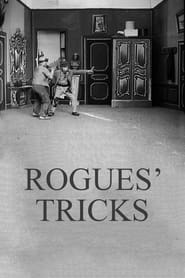
Rogues' Tricks
Fun film from French master Georges Melies has a couple burglar's breaking into a man's home and having to hide when that man returns. Instead of a trick film or something that he's known for, the director really changes gears here and instead delivers what's basically an action movie.
- 51
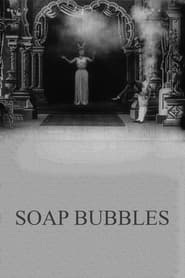
Soap Bubbles
A magician blows some big bubbles and makes heads of women appear inside them.
- 52
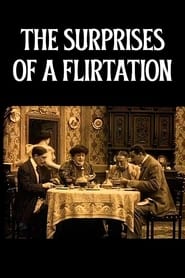
Love's Surprises
A man, his wife and their two sons are having a meal. One of the sons leaves the room pretending to be ill and collects a bunch of flowers form a cupboard and goes out. The other son takes a bunch of flowers from under his bed and he too leaves, followed by their father, also carrying flowers. The two sons and their father call on the same young women one after the other; as each arrives, the previous suitor is hidden in a piece of furniture: the father under a chair cover, one son in a cupboard and the other in a piano. A girlfriend of the young woman visits and the two play pranks on the hiding men by playing the piano and sitting on the chair cover. The three men emerge and the father chases his two sons outside until they remind him of his own folly; he gives his sons some money and urges them to keep silent.
- 53
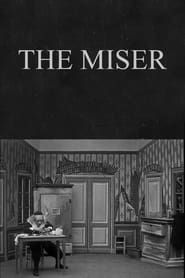
The Miser
This Georges Melies film is only available in a five-minute fragment. The film starts off with a title card setting up the events. An elderly miser keep all of his money to himself and refuses to help people no matter what they might need. We see him turn away a few people and then portions of the film are missing and we pick up later in the story as the old man is scared of something (apparently someone stole his money).
- 54
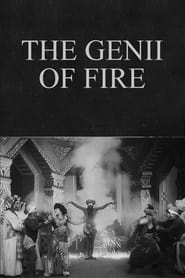
The Genii of Fire
Not much of a plot. A couple is menaced by some sort of bizarre religious cult. Then they're saved.
- 55
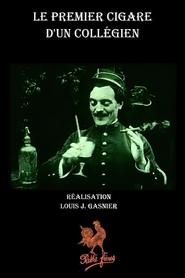
His First Cigar
The film is quite sophisticated for it's time with a relatively large number of scene changes as we follow Max's misadventures. It also features a close-up shot to show his reactions to the effects of the cigar he is smoking.
- 56
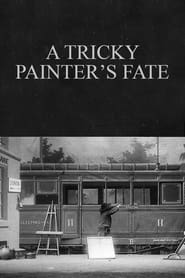
A Tricky Painter’s Fate
A painter boards a train and puts his paintings in the windows so that they look like passengers.
- 57
- 58

The Stepmother
A poor boy is mistreated by his stepmother when his father isn't present.
- 59
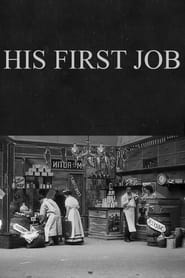
His First Job
Georges Melies' film has a new guy showing up in a store on his first day and he obviously just doesn't fit in as he makes one mistake after another.
- 60
The Little Soldier Who Became a God
A mixture of stop-motion and live action film from Émile Cohl with tin soldiers, children's drawings and cannibals in blackface.
- 61
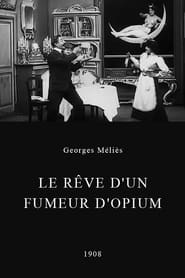
The Dream of an Opium Fiend
The opium fiend is seen in a den, puffing on this terrible narcotic. He then falls fast asleep and dreams that he is at home with his wife. He asks for something to drink and he is given wine, which he does not care for, and he is finally given some bottled beer and a glass, but he complains that the glass is too small and he gets a very large sized glass receptacle, into which his wife and maid servant pour the contents of the bottle. As he is about to drink the glass passes from his hand mysteriously, sailing through the room and out of the window to the moon…
- 62
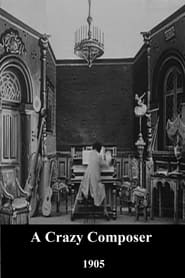
A Crazy Composer
A silly-looking composer attempts to compose. He then falls asleep, and dreams of all manner of bizarre nonsense.
- 63
- 64

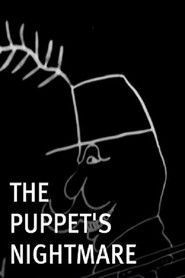
An Impossible Balancing Feat
A magician along with three doppelgangers perform an elaborate balancing act.
- 65
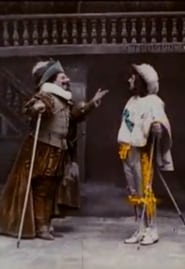
Cyrano de Bergerac
Considered the first motion picture to employ both color and sound, the only film record ever made of the original star of Rostand's famous play performing a scene from his most famous role. It is accompanied by a sound-on-cylinder recording of Coquelin's voice reciting one of Cyrano's speeches.
- 66
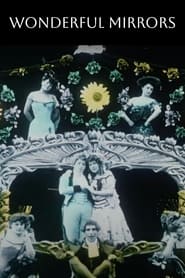
Wonderful Mirrors
A talented youth has compounded a wonderful fluid, a little of which he applies to the mirror in his room, and when he looks into it his image comes to life and comes out of the frame and imitates his every action. As soon as he rubs the fluid off the mirror his double disappears. When the servant come in, a little of the fluid is again rubbed on the mirror, and he has the same experience, his reflection stepping out and doing stunts, thereby scaring the poor fellow almost to death. The inventor of the fluid then takes the mirror with him and goes out on the street.
- 67

The Fur Hat
A grenadier had come to see his lover, a servant in the homes of wealthy bourgeois people. Hearing a noise, he is afraid of the masters and allows himself to be locked in a cupboard so as not to be seen. This is a hiding place that will spark many adventures.
- 68
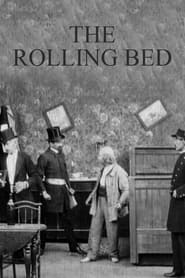
The Rolling Bed
An impecunious chap is unable to pay his rent, whereupon he is ejected, but all his furniture is retained and he is allowed to remove only his rolling bed. Pulling this a few blocks, he is exhausted and lies down on the bed to rest. He is soon the center of attraction, and the crowd continues to gather, when the police order him away, and as he refuses to move he is started off by the officers, who guide him for a time, but are forcibly deterred by indignant citizens from further interference. The impecunious man and his bed, which gains momentum as it runs down the inclines, cause much excitement en route, and finally arrive at the business center, where it comes to a stop alongside the walk. Our friend has purloined a fur coat and an auto horn on his tour, and now presents a modern chauffeur. (Gaumont catalogue)
- 69

- 70
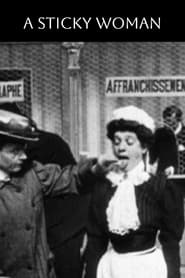
A Sticky Woman
A lady uses her maid to lick her stamps, when an overtly excited man notices the maid, forcibly kisses her, and they wind up stuck to each other.
- 71
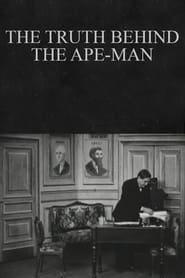
Man Monkey
A gentleman visits a hair consultant for his baldness problems. The latter recommends a new lotion. The gentleman lets himself be convinced and a bellboy is immediately dispatched for the delivery which arrives at the concierge's lodge. The concierge, curious, and believing it to be good wine drinks a good part of it. He then tops up the bottle with water from the carafe. His wife goes to take his package to the gentleman. The concierge who does not feel well goes to bed quickly. When he wakes up he is perked up. But dismay, he is completely covered in hair. At first frightened, his wife and he come up with an idea. They get hired by an impresario in a music hall number, to a big success.
- 72
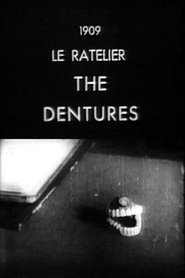
The Dentures
Mother in law gets a new set of dentures. Despite being initially happy, the family soon discovers the teeth have a life of their own and jump from their owner's mouth and bite everyone who comes near--from ladies to gentlemen to policemen.
- 73
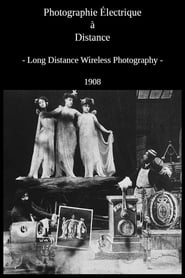
Long Distance Wireless Photography
Into a photography studio full of large fantastic machines steps an elderly couple. The bearded proprietor explains the equipment and gives them a demonstration: he starts machines whirring, and projects a painting of three women onto a large screen; suddenly the women begin to move. The customers are impressed. First the women sits in the special seat: she's projected onto the screen, and her good nature comes out in the laughing image. Then it's the man's turn, but the machine discloses a vastly different nature in him. Will his reaction threaten our proprietor's inventions?
- 74
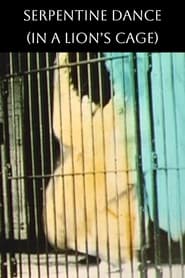
Danse Serpentine (In a Lion's Cage)
Madame Ondine performs a serpentine dance surrounded by big cats.
- 75

The Mysterious Retort
A wizard sleeps at a table in his well-appointed sitting room. From a drawer in the table, a snake appears.
- 76

- 77

Alcohol and Its Victims
A happy family is brought to ruin when the father starts drinking.
- 78
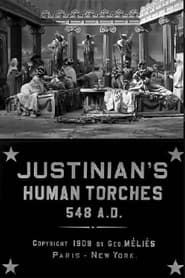
Justinian's Human Torches
During an orgy, Emperor Justinian orders three people to be torched alive.
- 79
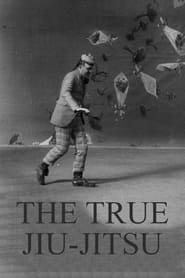
Dranem Performs The True Jiu-Jitsu
Armand Dranem performs The True Jiu-Jitsu ("Le Vrai Jiu-Jitsu", by P. Briollet & G. Fabri / C. D'Orviet) in this phonoscene by Alice Guy. This early form of music video was created using a chronophone recording of Dranem, who was then filmed "lip singing". Guy would film phonoscenes of all three major Belle Époque celebrities in France: Polin, Félix Mayol, and Dranem.
- 80
- 81

The Parish Priest's Christmas
The parish priest looks to create a Nativity scene for his church, but his congregation is too poor to afford the statuary dealer's price for a statue of baby Jesus. The miracle, then, is that the faithful's prayers are answered by the appearance of angels and the Virgin Mary, who present them with a statue.
- 82
A Funny Shave
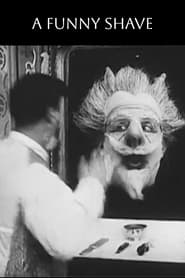
A man is trying to shave, but grotesque faces keep appearing in his mirror.
- 83
The Happy Microbes
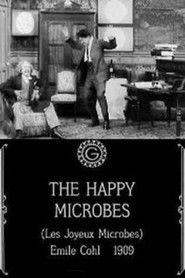
A scientist has acquired a microscope and is showing it off to his friend. He takes various body samples - hair, phlegm, etc. - and puts them under the microscope. The "microbes" coalesce and form different shapes, creating caricatures of various people, such as mothers-in-law and drunks. These animated characters goof around in traditional cartoon fashion.
- 84
- 85
At the Floral Ball
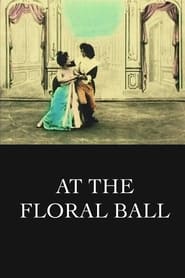
A turn-of-the-last-century hand-tinted short, which features two women, Miss Lally and Miss Julyett, dancing at a ball. By the legendary French filmmaker Alice Guy (attributed only, but not confirmed in any primary sources).
- 86
History of a Crime
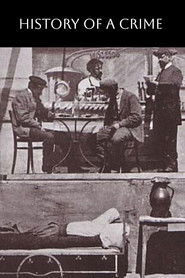
A convicted criminal dreams about his past the night before his execution.
- 87
- 88
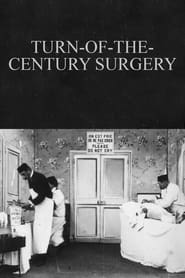
Turn-of-the-Century Surgery
George Mélies made a version of this a few years later, often titled Une Indigestion, but Guy-Blaché’s earlier film Chirurgie Fin de Siecle (1900) is more widely available. And it’s not one to watch the night before an operation. In this clinic, a sign pleads “On est prie de ne pas crier/Please do not cry”, and the doctors set about the patient with saws, cheerily hacking off limbs, and then slopping them into a bucket, all the while arguing ferociously with each other. They then reattach arms and legs from a bucket of “exchange pieces” (using glue) before re-animating their victim, I mean patient, with bellows. (from http://silentlondon.co.uk/2015/01/23/10-disgusting-moments-in-silent-cinema/)
- 89
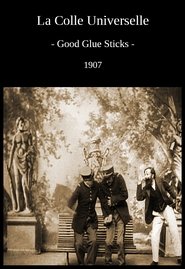
Good Glue Sticks
A peddler of "the best glue" sets up his outdoor stall. A crowd gathers for a demonstration. As he gives his pitch, two observant cops decide drive off his customers and close him down, much to his fury. He seeks revenge as they sit on a park bench.
- 90

Delhi, Great Capital of India
Rare stencil-coloured images of early 20th century Delhi during a Muslim festival.
- 91

- 92
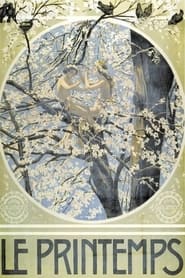
Spring
This darling compilation of Feuillade's 'Le Printemps' series embodies the joyous feeling of dancing out of winter into the spring.
- 93
Wilbur Wright and His Flying Machine
The film begins with a shot of Wilbur Wright starting the engine; an unidentified assistant (quite likely his brother, Orville) is seen at the front of the aircraft. From there, shots of the aircraft in flight with Wright at the controls along with an unidentified passenger cut to shots of onlookers on the ground, presumably military and press liaisons. The aircraft is shown in side-to-side flybys as well as low-altitude passes directly toward and away from the camera. The aerial shots begin at the 1:34 mark immediately after a shot of the aircraft coming to a landing directly approaching the camera. (Wikipedia)
- 94
Eccentric Waltz
Made in 1903, Eccentric Waltz showcases an exhibition by dancers Boldoni and Solinski, residents at the famous Eldorado cabaret in the Boulevard de Strasbourg in Paris. The lavish stencil colouring emphasises the woman's swirling skirt. (BFI)
- 95

Wild Birds in Their Haunts
The picture shows various kinds of birds in their natural environments, and in their natural colors, and at such close range that the very eyes of the little fledglings in the nest are easily discerned. Every feather seems distinct and the birds seem to be in such relief that it appears as though one could almost reach out and catch them.
- 96
The Fairies and the Faun
This is an incomplete fragment of a longer film, so doesn’t make much sense, but it’s very beautiful and colourful with plenty of fireworks, flames and fountains as well as the customary fairies, magic and dancing.
- 97
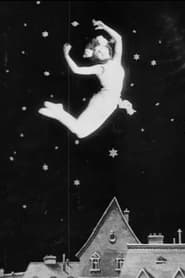
Serenade to the Moon
Second part of "Visions d'art" trilogy filmed in 1902 by Pathé Frères film studio. It was believed that only the third part of the trilogy had survived ("La Fée aux étoiles"). The second part was discovered in 2022 in Russian Gosfilmofond archive.
- 98
- 99
The Fairy of Spring
On a winter evening, a poor peasant woman waited for her husband, who had gone to gather firewood in the forest. He finally arrived. The man and woman returned to their gloomy home, devoid of the joyful cries of a child. This was their great sorrow and their greatest longing. A fairy, having heard their wishes, appeared to them in the guise of an old beggar woman and asked for alms. Having tested their kind hearts, she transformed the scene into a bright and sunny landscape. She summoned flowers, which gathered in her hand into a pretty bouquet. She offered it to them and then vanished. But, to their surprise, the flowers transformed into two beautiful children who brought joy and happiness with them. —Pathé catalogue supplement, August, 1906.
- 100

The Fantastic Diver
Ferdinand Zecca's remake of his own film "Plongeur fantastique" (The Fantastic Plunger, 1901) with the same premise, showing a diver with reverse motion editing for a curious effect