 trailers.fm
trailers.fm / Guide / Documentary + 1900s + English
English documentary films from the 1900s
The best 100 of 143
- 1
Panorama of the Paris Exposition, from the Seine
This panoramic scene is taken from a Seine steamboat and gives a rapid view of the banks of the river...
- 2
A Visit to the Seaside
The first successful motion picture in natural color, filmed with Kinemacolor. It is an 8 minute short film directed by George Albert Smith of Brighton, showing people doing everyday activities. It is ranked of high historical importance. Kinemacolor later influenced and replaced by Technicolor, which was used from 1916 to 1952.
- 3
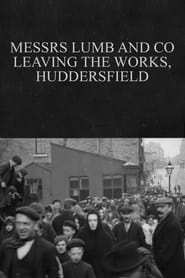
Messrs Lumb and Co Leaving the Works, Huddersfield
Yet another factory gate exit film from Mitchell and Kenyon.
- 4
Tram Ride Into Halifax
A breathtaking winter journey in the Pennines, from country to town and back again via electric tram.
- 5
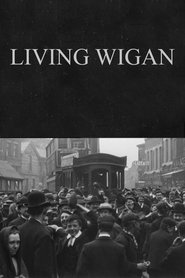
Living Wigan
A lively crowd surround the camera filming a tram leaving Wigan Market Place.
- 6
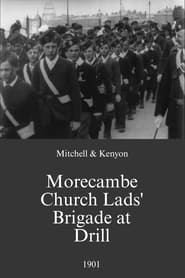
Morecambe Church Lads' Brigade at Drill
Larking about during Church Lads' Brigade drill and parade in Morecambe.
- 7
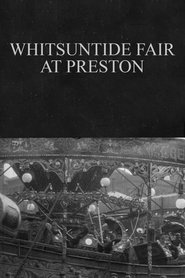
Whitsuntide Fair at Preston
All the fun of the Whitsuntide Fair in Edwardian Preston.
- 8
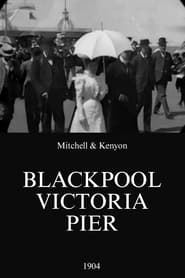
- 9
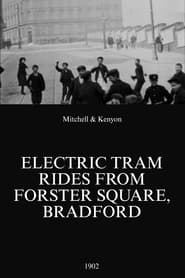
Electric Tram Rides from Forster Square, Bradford
An epic tour of the places and people of Edwardian Bradford.
- 10
Sheffield United v Bury
Sparkling images of fans and players at an Edwardian fixture at Sheffield's Bramall Lane.
- 11

Audley Range School, Blackburn
Lancashire children perform physical education exercises in (almost) perfect unison.
- 12
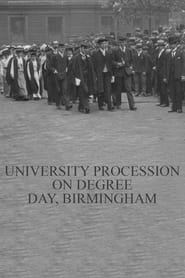
University Procession on Degree Day, Birmingham
Female graduates and gents sporting spectacular Edwardian whiskers take part in Birmingham’s first Degree Day ceremony.
- 13
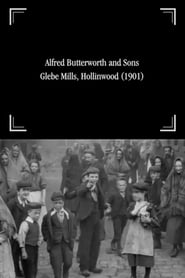
Alfred Butterworth and Sons, Glebe Mills, Hollinwood
A flood of Lancashire cotton workers and their children at the end of another shift.
- 14
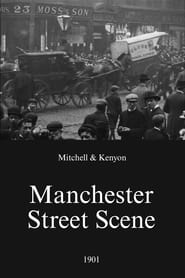
Manchester Street Scene
A rare glimpse of early Edwardian Manchester when the horse-drawn tram still reigned supreme.
- 15
Burnley v Manchester United
Believed to be the first film that features Manchester United in their first season as 'Manchester United', rather than 'Newton Heath' as they were known at the time.
- 16
Tapping a Furnace
A large bucket is lowered into a pit by male workers using machinery. Molten material from a furnace is poured into the bucket using a slide. The bucket, which has flames coming from inside, is lifted up from the pit by a crane.
- 17
Panorama Exterior Westinghouse Works
The view from a moving train shows some of the Westinghouse interests and the surrounding areas.
- 18
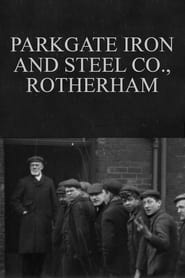
Parkgate Iron and Steel Co., Rotherham
Edwardian workers react to the camera at one of Rotherham's major employers.
- 19
Welding the Big Ring
A group of men weld one area of a large ring in a fire. They lift the ring, which is hanging horizontally on chains, out of the fire. Four men hammer the hot area on the ring into shape while the remaining men hold the ring. They put the ring into the fire again, take it out, and take it over to a machine which continuously hammers down on that area of the ring. The men then take it away from the machine and hammer it themselves into shape. The ring is presumably a piece of a generator.
- 20
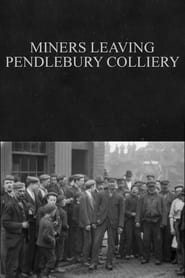
Miners Leaving Pendlebury Colliery
A group of miners (including a sole black worker) exits the colliery gates.
- 21
Westinghouse Air Brake Co. (Moulding Scene)
Men working in teams carry buckets of molten material and pour the material into what appear to be molds lined up on the ground.
- 22
Casting a Guide Box
A large bucket full of molten material is poured into a large container, possibly a mold, by a group of men using machinery. Some other men stoke the fire under the container. When finished pouring, the men lift the bucket up from the container and take it away on a crane. Two men put prods down repeatedly into the container, while others lay covers on top of it.
- 23
Westinghouse Works
Billy Bitzer filmed 21 short actualities inside the Pittsburgh Westinghouse Works in April and May of 1904. Audiences of the day would have been treated to footage of factory panoramas, women winding armatures and turbines being assembled. These industrial films were produced for the American Mutoscope & Biograph Company.
- 24
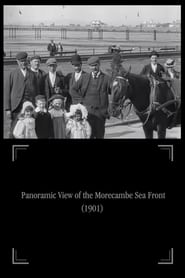
Panoramic View of the Morecambe Sea Front
One long traveling shot through a sea front lined with tourists, workers, and sundry others.
- 25
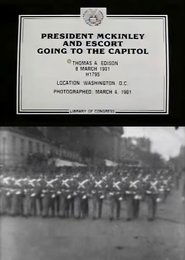
President McKinley and Escort Going to the Capitol
Cavalry and foot-soldiers escort President McKinley.
- 26
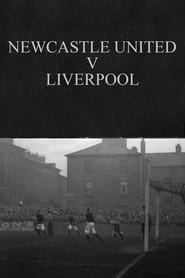
Newcastle United v Liverpool
An Edwardian football match at Newcastle's St James' Park ground.
- 27
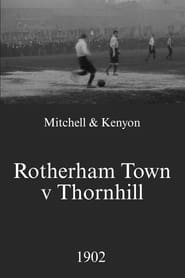
Rotherham Town v Thornhill
A ropey pitch and worse goalkeeping in a typical non-league football derby in Edwardian Yorkshire.
- 28
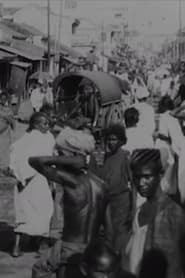
A Native Street in India
Early film of a crowded street scene in an unidentified Indian city.
- 29
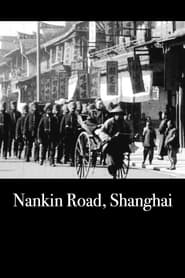
Nankin Road, Shanghai
This is an extraordinary window on to the heart of cosmopolitan Shanghai, over a hundred years ago, featuring a Nanjing Road bustling with crowds of Chinese, Sikhs and Europeans. It is the only known surviving example of the film reportage shot by British war correspondent Joe Rosenthal during his coverage of the Boxer Rebellion in China between 1900 and 1901.
- 30
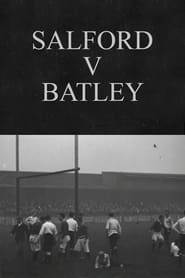
Salford v Batley
Batley go down to Lancashire rivals Salford in the very first season of the Northern Rugby League.
- 31
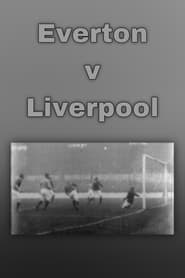
Everton v Liverpool
The earliest surviving Merseyside derby on film catches two of Everton's goals in a 3-1 home win.
- 32
Rochdale Tram Ride
Splendid views of Edwardian Rochdale from the front of a tram after a recent dusting of snow.
- 33
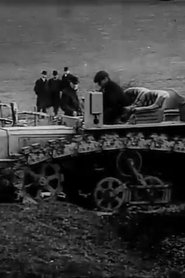
The World's First Caterpillar Track
A demonstration by the R. Hornsby engineering company of Grantham of a revolutionary all-terrain vehicle.
- 34
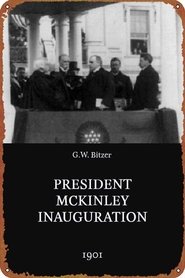
President McKinley Inauguration Footage
Original President McKinley Inauguration Footage from 1901.
- 35
- 36
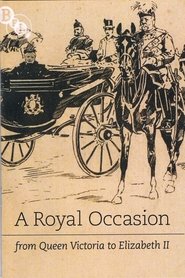
Edward VII's Coronation
Film of Edward VII's coronation. Appears on the BFI DVD "A Royal Occasion".
- 37
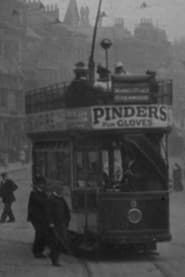
Tram Rides through Nottingham
This fascinating record of Edwardian Nottingham was filmed from the driver's platform of a tram on a single journey through the city centre between its two main stations. The sequence follows the same route as today's Nottingham Express Transit tramway, taking the viewer along Listergate and Wheelergate into Old Market Square before turning right into Long Row and on into Queen Street.
- 38

- 39

Blackpool North Pier
Edwardian holidaymakers throng to the attractions at Lancashire's premier seaside resort.
- 40
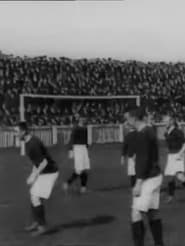
Bradford City v Gainsborough Trinity
Bradford City's first ever home league game after switching from rugby league football to association football in 1903.
- 41

Cunard Vessel at Liverpool
Evocative film of the passengers and crew of a ship docked at Liverpool.
- 42
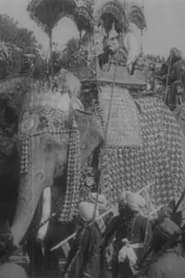
State Entry into Delhi of Lord Curzon, the Viceroy
Film showing the Viceregal party entering Delhi on lavishly decorated elephants, as part of the Coronation durbar of 1903.
- 43
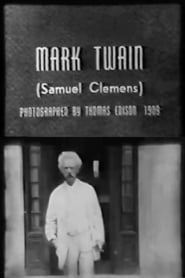
Mark Twain (Samuel Clemens)
The only known moving-image footage of the author, filmed at his home, Stormfield, in Redding, Connecticut. The silent short shows Twain walking about his estate, relaxing indoors with his daughters Clara and Jean. No known voice recording survives. Part of this footage has been associated with Edison’s The Prince and the Pauper (1909). Although Thomas Edison has sometimes been mistakenly named as director, he was never credited as director on any films; the actual director of this short is unknown.
- 44
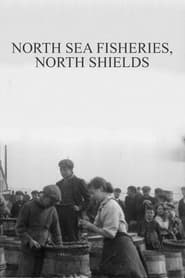
North Sea Fisheries, North Shields
Girls gut herring on the quay at North Shields while a Showman tries to stir up trouble.
- 45
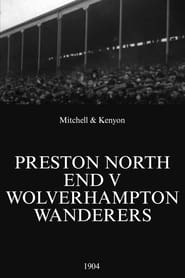
Preston North End v Wolverhampton Wanderers
The Lillywhites take on the Wolves at Deepdale, watched by a large crowd and the club mascot.
- 46
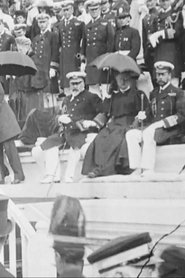
Olympic Games at Athens
This early film offers a snapshot of what became known as the Interim (or Intercalated) Games of 1906. Having hosted the first modern Games in 1896, Athens felt that it should be the permanent venue, but the International Olympic Committee disagreed, wanting the event held in different cities around the world. The compromise was this separate event, to be held in Athens between the official Games every four years.
- 47
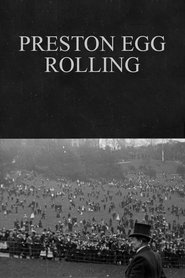
Preston Egg Rolling
Thousands of people got together on Easter Monday for the traditional egg rolling.
- 48
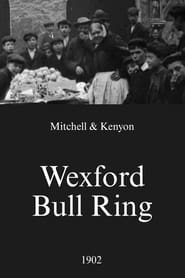
Wexford Bull Ring
This film is part of the Mitchell and Kenyon collection - an amazing visual record of everyday life in Britain at the beginning of the twentieth century.
- 49
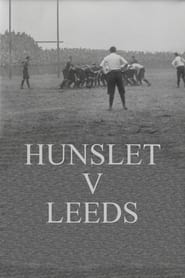
Hunslet v Leeds
A less-than-serious Leeds team take a four-goals-and-two-tries battering from Hunslet.
- 50
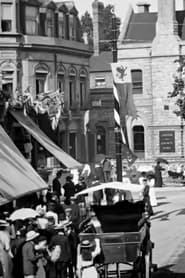
Panorama of Ealing from a Moving Tram
A camera sits on top of a moving train, providing a panoramic view of Ealing (western London) as the train moves.
- 51
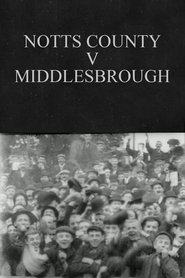
Notts County v. Middlesbrough
The game is held up for the camera to do a full tour of the cheering crowds at Trent Bridge, Notts County's home until 1910.
- 52
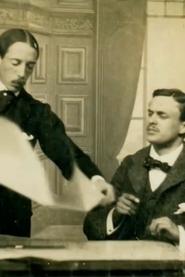
Santos Dumont Explaining His Air Ship to the Hon. C.S. Rolls
A short documentary registering the meeting between two aviation pioneers: the Brazilian Santos Dumont and the Briton Charles Rolls. In it, Dumont presents his ideas for a future balloon, showing to Rolls the concept of such invention and the project with his notes, all of which the other man delightfully enjoys.
- 53
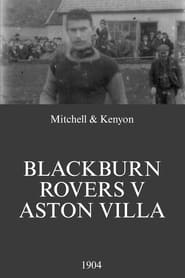
Blackburn Rovers v Aston Villa
The entry of the teams and action from both halves of an Edwardian football game at Ewood Park.
- 54
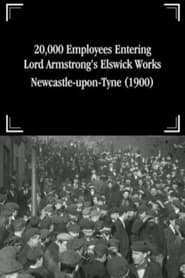
20,000 Employees Entering Lord Armstrong's Elswick Works, Newcastle-upon-Tyne
This film is part of the Mitchell and Kenyon collection - an amazing visual record of everyday life in Britain at the beginning of the twentieth century.
- 55
TR in San Francisco, 1903
The following is a scene-by-scene description of the film: The camera was positioned on the southeast corner of O'Farrell Street and Van Ness Avenue, and pans from north to west to south, and then back to west. [Frame: 0100] The view is north on Van Ness Avenue toward the approaching band and cavalry. Students of Whittier School are in the foreground. [0604] The band passing at left is led by conductor Paul Steindorff. [0900] Following the band are the Cleveland Grays, a noted black cavalry troop, led by Captain Young, the first black graduate of West Point. [1398] After a cut in the continuity of the film, the President's carriage approaches along the west side of the avenue.
- 56
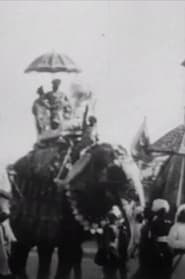
Procession of Elephants with Howdahs - India
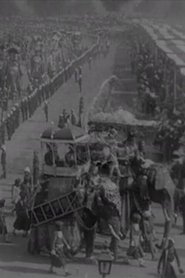
An elephantine spectacle, likely part of the celebrations for the visit of the Prince and Princess of Wales to India.
- 57
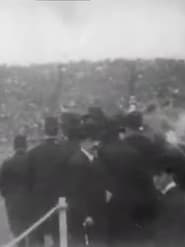
Princeton and Yale Football Game
First is shown a fine panoramic view of the grandstand at the Yale field, showing the enormous gathering of football enthusiasts who have come from far and near to witness the giants struggle for the collegiate championship.
- 58
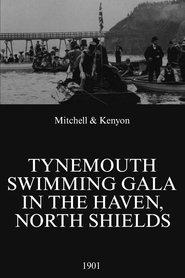
Tynemouth Swimming Gala in the Haven, North Shields
Edwardian crowds enjoy a fancy-dress swimming race.
- 59
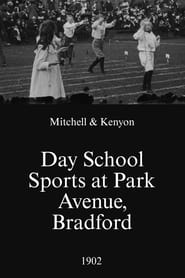
Day School Sports at Park Avenue, Bradford
Barrels of laughs and sackfuls of fun at a school sports event in Edwardian West Yorkshire.
- 60
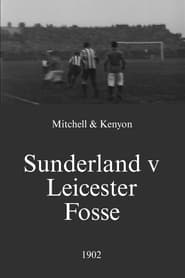
Sunderland v Leicester Fosse
A resounding win for Sunderland in the FA Cup, urged on by an enthusiastic band.
- 61
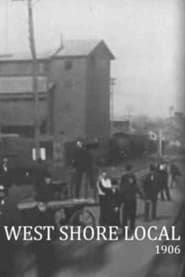
West Shore Local
The view from the pilot of an Ulster and Delaware locomotive pulling out of Kingston Union Station through Kingston, NY, in 1906.
- 62
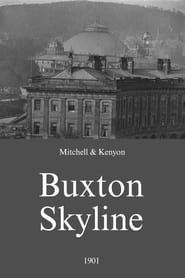
Buxton Skyline
A striking panorama of the Peak District town and its magnificent Georgian Crescent.
- 63
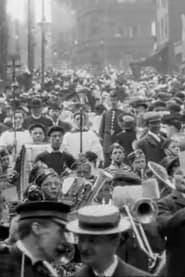
Halifax Catholic Procession
A Mitchell & Kenyon actuality depicting the northern folk of Halifax, dressed in their Sunday best to witness and participate in a Catholic procession.
- 64
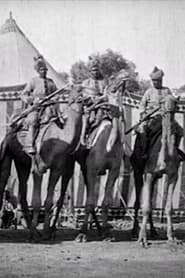
- 65

Special March Past of St. Joseph's Scholars and Special Parade of St. Matthew's Pupils, Blackburn
A short documentary of mild curiosity value showing a group of Blackburn school children passing before the camera.
- 66
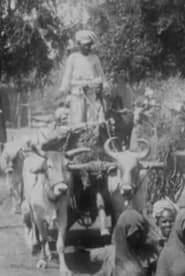
Salvation Army Parade in Indian Village No.2
Salvation Army General Commissioner Edward Higgins features in the this film of a brass band parade through a village.
- 67
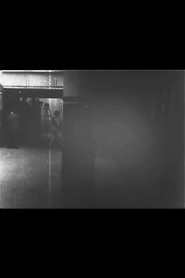
Opening Ceremonies, New York Subway, October 27, 1904
People on street outside bunting draped building. VIP's out & photographers take pictures. Park & subway entrance. Old bobby helmets on police as VIP's into subway. Pan over waving people with trolley behind and carriage. Appears to be near city hall. Pan inside sideway. People walking out including well-dressed women. Subway past camera left to right. Ceremony. Subway opening.
- 68
- 69
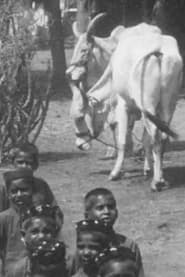
Salvation Army Parade in Indian Village - No.1
Actuality film showing a busy Salvation Army parade in a rural village under the British Raj.
- 70
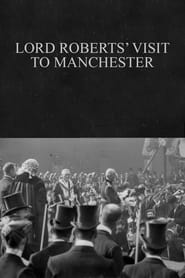
Lord Roberts' Visit to Manchester
This is a news actuality film of the former Commander in Chief of the Boer War, Lord Roberts, visiting Manchester to much hoopla.
- 71

- 72
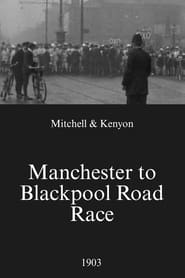
Manchester to Blackpool Road Race
Over a hundred Edwardian athletes gather for a gruelling walking race.
- 73
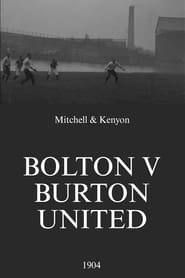
Bolton v Burton United
Bolton Wanderers overpower the shortlived Burton United at Burnden Park under rainy skies.
- 74
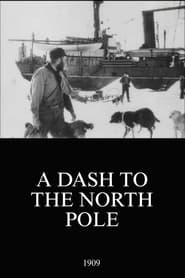
A Dash to the North Pole
This film footage of the Ziegler North Pole expedition was reissued in Britain by Charles Urban in 1909 when all things Polar were of almost obsessive interest to the British film-going public.
- 75
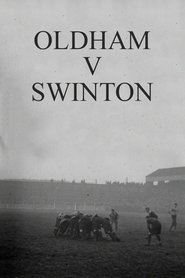
Oldham v Swinton
The evolution of Rugby League in a top of the table match between rival Lancashire clubs.
- 76
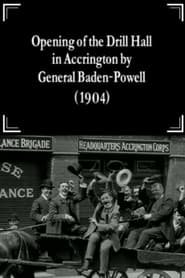
Opening of the Drill Hall in Accrington by General Baden-Powell
It shows General Baden-Powell, hero of the Anglo-Boer war, and his family visiting Accrington.
- 77
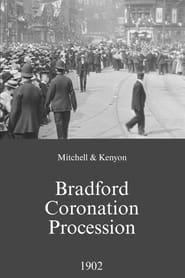
Bradford Coronation Procession
Much of West Yorkshire turns out to mark the accession of King Edward VII to the throne.
- 78
Wrestling at the New York Athletic Club
Several chairs rest against a blank wall; three men, then a fourth and soon seven in all, divide into various pairs and wrestle for the camera.
- 79
Annual Baby Parade, 1904, Asbury Park, N.J.
Baby Parade at Asbury Park, N.J., in 1904.
- 80
- 81
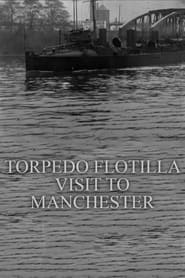
Torpedo Flotilla Visit to Manchester
The might of the British Navy struts its stuff down the Manchester Ship Canal.
- 82
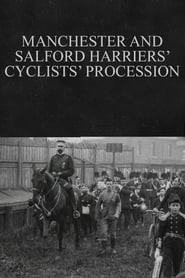
Manchester and Salford Harriers' Cyclists' Procession
Edwardian cycling competition.
- 83
Lieutenant Clive Wilson and the Tranby Croft Party Hull
This film is part of the Mitchell and Kenyon collection - an amazing visual record of everyday life in Britain at the beginning of the twentieth century.
- 84
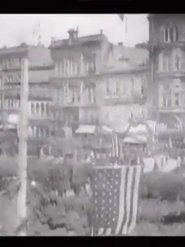
Panorama, Union Square, San Francisco
We have just received from our operators accompanying President Roosevelt on his great tour of the Pacific Coast, a splendid series of films covering his reception in San Francisco. The weather was all that could be desired, and the films are, therefore, very fine photographically. There are five scenes in all, as follows: 5. President Roosevelt on the Reviewing Stand. This is a great film. It shows the President as he is entering the reviewing stand, follows him to the reviewing position, and then gives a swinging panorama of Union Square, with its immense throng of spectators.
- 85
- 86
- 87
Final of International Cup at Cork Regatta Between Leander and Berlin
The International Cup Races were held at Cork over three days in July (21st , 22nd, 23rd) and they marked the climax of the great Cork Exhibition of that summer.
- 88

Street Scenes in Perth, Western Australia
Leonard Corrick’s camera moves up and down the streets of Perth recording the action on the street. At one point a man bumps into another man in the street and fisticuffs ensue as the camera moves past.
- 89
Fighting the Flames, Dreamland
Dreamland was a theme park at Coney Island, Brooklyn that opened in 1904. One of its major attractions was the stunt spectacular "Fighting the Flames," which simulated a major fire at a six-story hotel and featured a cast of 2000 including 120 firefighters, who had to rescue guests jumping from windows as well as 15 people trapped on the collapsing roof. Ironically, Dreamland itself was destroyed in 1911 in a massive fire.
- 90
AAA Championships at Fartown, Huddersfield
The annual championship meeting of England's premier athletics association.
- 91
Over Route of Roosevelt Parade in an Automobile
We have just received from our operators accompanying President Roosevelt on his great tour of the Pacific Coast, a splendid series of films covering his reception in San Francisco. The weather was all that could be desired, and the films are, therefore, very fine photographically. There are five scenes in all, as follows: 1. An automobile ride down San Francisco's busy Market Street, showing the elaborate decorations, crowds of people, traffic, etc. A very novel and effective picture.
- 92
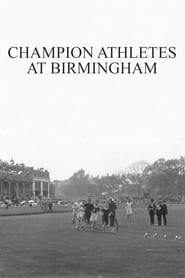
Champion Athletes at Birmingham
Crowds enjoying the spectacle at Birmingham Athletics Club.
- 93
Jeffries in His Training Quarters
Shot against a painted backdrop of river with town on other bank & mountains behind. Throwing medicine ball while group of men watch, at least one black. He stands up & gets hit on head with ball. Jeffries shadow boxing & dancing with weights in hands. Sparring barehanded, or wrestling with another man.
- 94
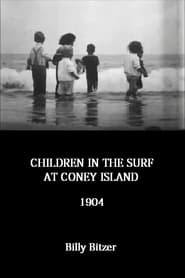
Children in the Surf at Coney Island
"Children in the Surf, Coney Island" is a very short documentary with Billy Bitzer behind the camera.
- 95

Pres. Roosevelt's Fourth of July Oration
The best and most characteristic picture of the President ever made. The camera is close by so that every feature shows out sharp and distinct. The President is first seen coming on the stand laughing and shaking hands with friends and being wildly cheered by everybody. Then comes the speech. The President is very enthusiastic and is shown at his best. All his well known mannerisms are very apparent. The picture ends with a view of the departure of the President with Mrs. Roosevelt in a carriage. Before the carriage starts the President is held up and interviewed by reporters.
- 96
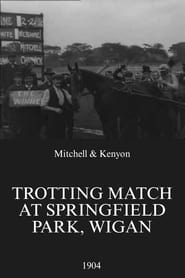
Trotting Match at Springfield Park, Wigan
Attending trotting matches - in which horses in harness race at specific gaits - was a popular Edwardian pastime.
- 97
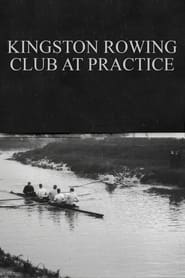
Kingston Rowing Club at Practice
A delightful day out on the water as Edwardian rowers mess about on the River Hull.
- 98
Fire and Flames at Luna Park, Coney Island (An Attraction at Coney Island)
A fire fighting demonstration in Luna Park, Coney Island. on August 15, 1904.
- 99
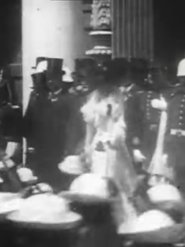
President Roosevelt Reviewing the Troops at Charleston Exposition
The President is seen standing in front of the Auditorium on a small platform which was built for the occasion. Mrs. Roosevelt is standing at his left, holding the Harvard bunch of carnations in her right hand. Beside the President and Mrs. Roosevelt were Capt. F. W. Wagener, Mayor Smyth, of Charleston, S. C., Governor McSweeney, of South Carolina, Governor Avcock and many other prominent people.
- 100
