 trailers.fm
trailers.fm / Guide / Documentary + 2010s + Russian
Russian documentary films from the 2010s
The best 100 of 130
- 1
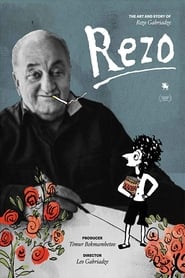
Rezo
The rich inner world of famous Georgian theater and film director, artist and puppeteer Rezo Gabriadze is as fantastic as the animation into which he has poured this story of his life. Rezo’s director son Levan "Leo" Gabriadze, who previously made the horror film Unfriended (2014), leaves it to his father to talk about a life suffused with magical thinking.
- 2
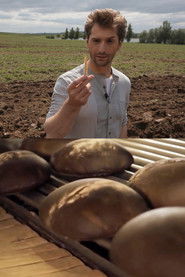
Bread
A unique project, the popular science series "Bread" is shooting around the world, interviews with scientists and world-class experts. There are 4 series in the project: "Immortality", "Money", "Hunger" and "Gene". This is a story about how bread controlled the destinies of continents and empires, how the rise of some civilizations and the fall of others depended on it, how in different countries and at different times it performed the function of money. This is the first time such a complete study of bread and grain is being carried out on a television screen. The focus is on the most interesting events in the history of Russia, Italy, France, Germany, England, China, Egypt and other countries.
- 3
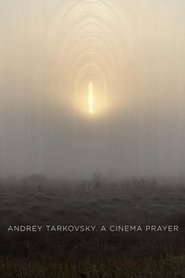
Andrey Tarkovsky. A Cinema Prayer
An account of the life and work of Russian filmmaker Andrey Tarkovsky (1932-86) in his own words: his memories, his vision of art and his reflections on the fate of the artist and the meaning of human existence; through extremely rare audio recordings that allow a complete understanding of his inner life and the mysterious world existing behind his complex cinematic imagery.
- 4
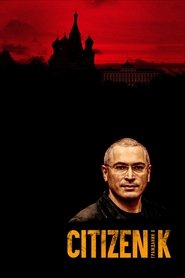
Citizen K
The strange case of Mikhail Khodorkovsky — once believed to be the wealthiest man in Russia — who rocketed to prosperity and prominence in the 1990s, served a decade in prison, and became an unlikely martyr for the anti-Putin movement.
- 5
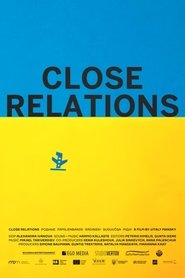
Close Relations
Vitaly Mansky’s intimate and insightful new documentary finds him crisscrossing Ukraine in the wake of the Maidan uprising, which has left his relatives scattered on both sides of a highly charged and dizzyingly complex political situation.
- 6
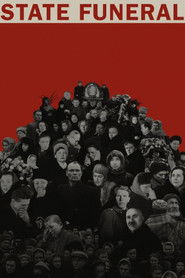
State Funeral
The enigma of the personality cult is revealed in the grand spectacle of Stalin’s funeral. The film is based on unique archive footage, shot in the USSR on March 5 - 9, 1953, when the country mourned and buried Joseph Stalin.
- 7
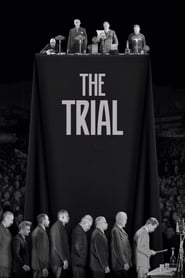
The Trial
In 1930 in Moscow, USSR. the Soviet government puts a group of top rank economists and engineers on trial, accusing them of plotting a coup d'état. The charges are fabricated and the punishment, if convicted, is death.
- 8
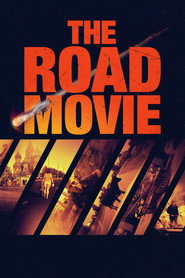
The Road Movie
Anything can happen on Russian roads and is precisely shot by the dashboard camera. Super-objective video registration grows into the strong image of Russian national character – with its permanent awaiting for the miracle and habitual approach to real dramas. A forest on fire as a symbol of Russian hell, a military tank at a car wash and car chase in the vicinity of Kremlin shot with a dashboard cam at the same time when Boris Nemtsov, the leader of political opposition, was shot dead near Kremlin. Dashboard cam depicts life in it’s purity as an unbiased observer.
- 9
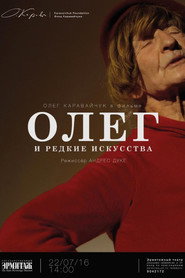
Oleg and the Rare Arts
The legendary Oleg Nikolaevitch Karavaichuk is the mysterious and moving subject of this loving film by the young director Duque. He was moved by the music the pianist composed for a film by Kira Muratova and is the first foreigner to win the trust of the eccentric and still active 89-year-old Russian.
- 10
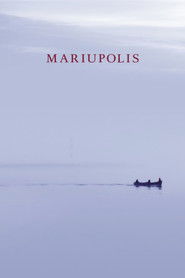
Mariupolis
The city of Mariupolis is by the Azov sea. It is also on the river Kalmius. Most of the city’s residents, half a million according to the last census, are working for the steel factory and do fishing, for leisure or food, in between shifts. The orthodox church towers above the city and its newly build bronze domes are sitting next to it, waiting to be donned. A tent near by is sheltering a crying icon, which receives a steady flow of visitors.
- 11
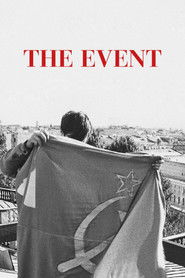
The Event
In August 1991 a failed coup d'état attempt (known as Putsch) led by a group of hard-core communists in Moscow, ended the 70-year-long rule of the Soviets. The USSR collapsed soon after, and the tricolour of the sovereign Russian Federation flew over Kremlin. As president Gorbachev was detained by the coup leaders, state-run TV and radio channels, usurped by the putschists, broadcast Tchaikovsky's "Swan Lake" instead of news bulletins, and crowds of protestors gathered around Moscow's White House, preparing to defend the stronghold of democratic opposition led by Boris Yeltsin, in the city of Leningrad thousands of confused, scared, excited and desperate people poured into the streets to become a part of the event, which was supposed to change their destiny. A quarter of a century later, Sergei Loznitsa revisits the dramatic moments of August 1991 and casts an eye on the event which was
- 12
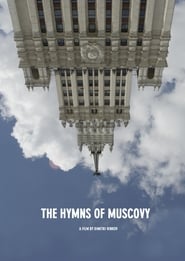
The Hymns of Muscovy
The film is a trip to the planet Muscovy - an upside-down twin city of Moscow in space. As the title of the work suggests, the journey also takes us back in time. Gliding over the surface of the planet, we look down and see historic architectural styles fly by - the exuberant Socialist Classicism, aka Stalinist Empire, the austere and brutish Soviet Modernism, and the hodgepodge of contemporary knock-offs and revivals of the styles of the past. An essential companion to this journey through time and space are Hymnic Variations on the Soviet anthem.
- 13

I Don't Believe in Anarchy
The film details the early years of the legendary Siberian Punk/Rock group 'Гражданская Оборона' (Grazhdanskaya Oborona), and its frontman, Egor Letov.
- 14
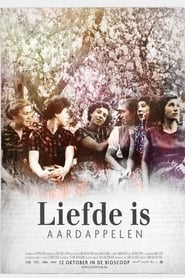
Love Is Potatoes
One day, Dutch film maker van der Horst was given her inheritance: 6 square meters, one sixth of a small, wooden house in the Russian countryside where her mother grew up. It was as if life had handed her a card she felt forced to play. She began a journey into the past, back into the childhood of her Russian mother and her five sisters, all of whom struggled with fear, famine and war in Stalin’s Russia; experiences that left them scarred to their very soul. Aliona’s quest into the lives and fate of her family becomes a loving, poignant, and poetic film with Chekhovian characters. Accompanied by the magical animation of acclaimed Italian artist Simone Massi, unimaginable events in the Soviet past are given an immediate charge. Along with the stories of ordinary people living in the small farmhouse, the film maker tells the tale of Soviet terror, immense bravery and a fear that has never
- 15
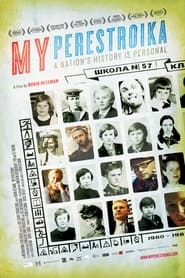
My Perestroika
Tells the story of five people from the last generation of Soviet children who were brought up behind the Iron Curtain. Just coming of age when the USSR collapsed, they witnessed the world of their childhood crumble and change beyond recognition. Through the lives of these former schoolmates, this intimate film reveals how they have adjusted to their post-Soviet reality in today's Moscow.
- 16
Victory Day
Every year, on the 9th of May, people gather in Treptower Park in Berlin. They come dressed in their best outfits or in Soviet military uniform. They carry flags, banners and posters. They lay flowers at the monument to the Soviet soldier; they sing, dance and drink. They celebrate the victory of the Soviet Union over Nazi Germany.The film is a direct reportage from Treptower Park 72 years after the victory.
- 17
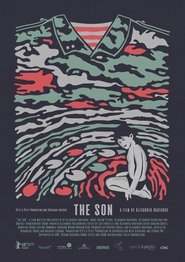
The Son
In 2013, Dima Ilukhin, the cousin of the film’s director and a soldier in the Russian army, died on duty in the Republic of Dagestan in the North Caucasus. He was 21 years old. This incident marks the starting point for Abaturov’s reflection on the military. He films the training of new recruits in Siberia, as they bid farewell to their mothers and girlfriends, learn the mechanics of a Kalashnikov, or how to throw a hand grenade and administer first aid. While his parents try to cope with their loss, Dima’s former fellow recruits have to return to battle.
- 18

Putin's Witnesses
Russian Federation, December 31, 1999. After President Boris Yeltsin's unexpected resignation, Prime Minister Vladimir Putin becomes acting president of the country. From that day and for a year, Vitaly Mansky's camera documented Putin's rise to power. The story of a privileged witness. The harsh explanation of the reason why politics is the art of possibility of achieving the best with the support of many, but also of giving the worst in return.
- 19
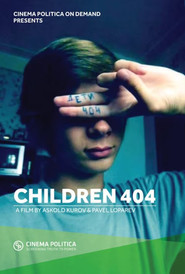
Children 404
In 2013, Russian President Vladimir Putin passed a bill forbidding the “promotion of nontraditional sexual relations to minors.” LGBT youth, now defenseless against insults and intimidation under this “gay propaganda” law, are considered sick, sinful and abnormal. Psychologists, teachers and even parents can be fined or imprisoned for supporting them. Forty-five Russian teens and tweens share their stories through anonymous interviews and video diaries. They detail their humiliations and discriminations, as well as their courageous stands against bullies. Their testimonies are collected online as the Children 404 project, named after the common “error 404 - page not found” web message. The support group’s founder struggles within the system to bring public attention and empathy to the victims of this government-endorsed hate, while activist Pasha decides he must leave his homeland altoge
- 20
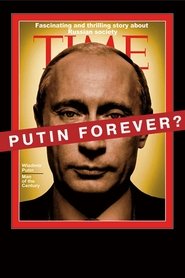
Putin Forever?
Russian Federation, May 6, 2012. On the eve of the ceremony of inauguration of Vladimir Putin, elected for a third term, the police brutally repressed a march of protest over the lack of freedom existing in the nation. Some people believed that this demonstration would be the beginning of a peaceful revolution, but it was the day when silence and fear won the game. Realize what happens when a person has too much power in his hands.
- 21
The Term. Beginning of a Big Story
The documentary project The Term was conceived in May 2012. When the directing trio commenced mapping the Russian sociopolitical landscape, Vladimir Putin had just settled into the Kremlin for his third term. The original experimental forma
- 22
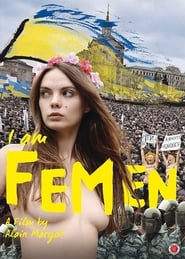
I Am FEMEN
Oxana is a woman, a fighter, an artist. As a teenager, her passion for iconography almost inspires her to join a convent, but in the end she decides to devote her talents to the Femen movement. With Anna, Inna and Sasha, she founds the famous feminist group which protests against the regime and which will see her leave her homeland, Ukraine, and travel all over Europe. Driven by a creative zeal and a desire to change the world, Oxana allows us a glimpse into her world and her personality, which is as unassuming, mesmerising and vibrant as her passionate artworks.
- 23

Anton's Right Here
How is it possible to feel someone elses pain? The hero of this film is an autistic boy. His life is divided between an apartment with peeling walls on the outskirts of a large city, and a mental hospital. Anton comes into the frame when he is on the point of becoming a patient at a residential neuropsychiatric institution, a place where people with the sort of diagnosis that he has do not live long. The author, the camera, the hero. The distance between them shrinks with every passing minute, and the author has to enter the shot and become a character in the story. However, it is not a story about how one person helped another, but about how one person recognized herself in another. About how there is Another who lives in each of us and must be destroyed every day inside of us in order to survive.
- 24
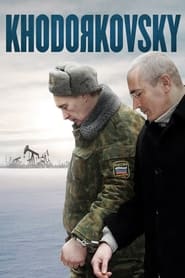
Khodorkovsky
Khodorkovsky, the richest Russian, challenges President Putin. A fight of the titans begins. Putin warns him. But Khodorkovsky comes back to Russia knowing that he will be imprisoned, once he returns. When I heard about it, I asked myself: why didn't he stay in exile with a couple of billions? Why did he do that? A personal journey to Khodorkovsky.
- 25
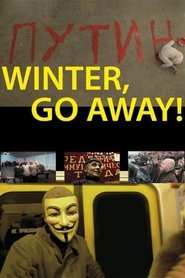
Winter, Go Away!
Ten director graduates from Marina Razbezhkina’s School of Documentary Film and Documentary Theatre lived with a camera for two months in order to chronicle the last “Russian winter” and its popular uprising against Vladimir Putin’s presidential run. People, faces, conversations, protests, failures and triumphs come together to chronicle the campaign.
- 26

Blin Cat
A video essay about a conversation the director had with a friend about a particular picture of a cat sitting in front of a plate of blins.
- 27
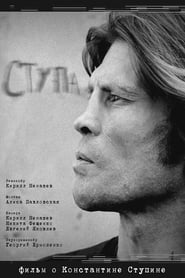
RocknRolla
Konstantin Stupin or just Stupa - rock-n-roller from Orel. He is 44 years old, we take him out of the madhouse and start making a film. Stupa in the last years of the existence of the USSR, as a schoolboy, decided to make music. He became the leader of the Oryol group Night cane: performances at school with songs about hell, sex, drugs, with texts like “take the Communist Party forgotten by everyone, drop two letters and get the SS”. Then the big scenes of the city and, as a result, the “Festival of Hopes”, organized by Artemy Troitsky, where the Night Cane, being the only non-Moscow group, receives a prize of audience sympathy. The texts for the festival have already become different, much deeper and more serious, but with constant protest in content and form.
- 28
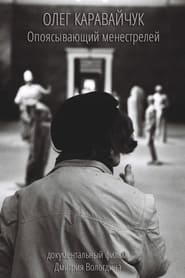
Oleg Karavaichuk. Encircling Minstrels
Legendary St. Petersburg composer Oleg Karavaichuk strolls through the Hermitage accompanied by his music. A seething genius among the masterpieces and interiors of the Winter Palace similar to himself.
- 29
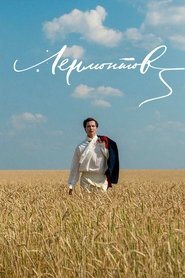
Lermontov
200 years ago, the Russian poet Mikhail Lermontov was born. The young man with huge eyes: his portrait is known to everyone since school. Lermontov wrote poetry, fought, fell in love, and was killed in a duel. Short life of 27 years. But what do we know about the real Lermontov? Biographical documentary-feature film tells in detail about the life of an outstanding person and a great poet.
- 30
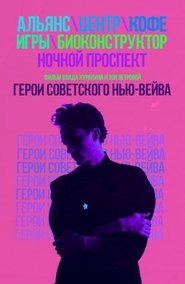
Heroes of the Soviet New Wave
The film tells about the birth of a new wave in the USSR under a strict political regime and about the era of "perestroika", when musicians received freedom of expression.
- 31

The Tundra Book. A Tale of Vukvukai, The Little Rock
72 years have passed as deer herder Vukvukai lives in the depths of Chukotka. He is an old man full of energy and wisdom - the 'real man of the tundra' whose life can not be seen apart from by the deer. His people take care of a huge herd - over 14,000 deer. Their life is a non-stop struggle for survival and well-being in the most harsh weather conditions of Chaun-Chukotka. They deeply believe in the strength of tradition and so succeed in their struggle. The ancient culture of Nomadic Chukchi takes care of them, so they preserve and follow it. As far as it is now - their realm remains stable.
- 32
At Their Fingertips
Nadia Kuznetsova is 28 years old, she lives in Veliky Novgorod, graduated from school and University here, and dreams of going to the sea - and getting her fingers back. Nadia has a rare genetic disease-epidermolysis bullosa, which is called "butterfly syndrome". The patient's skin is injured by any touch. The disease is incurable: as Nadia herself says, "I don't fight it – I live with it." She is fighting for something else - to lead the life of an ordinary person.
- 33
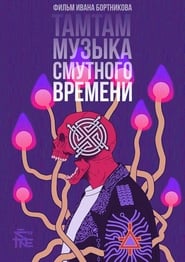
TaMtAm - Music of the time of troubles
Documentary film about the first St. Petersburg music club TaMtAm. It existed since 1991 upon 1996 and was held by Vsevolod Gakkel, ex-cellist of "Аквариум". The concept was modelled on cult NY club CBGB-OMFUG. Despite its controversial history this is the place where a new generation of Russian punk music was discovered.
- 34
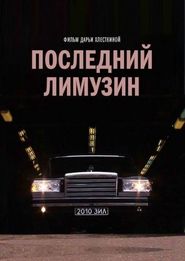
The Last Russian Limousine
Faced with the relentless demise of the factory they work at, Mikhail, Andrey, Nina, Vladimir, Nadia and Luda – bosses, foremen, engineers and workers at the giant Moscow automobile plant ZIL – cling to their established routines and professional pride to stay upright in a world which is crumbling around them. When an order comes in to produce three of the factory’s legendary hand-made limousines, once the centerpiece of Soviet military parades on Moscow’s Red Square, Mikhail’s team of hand-picked specialists throws itself at the opportunity to show what they are worth.
- 35
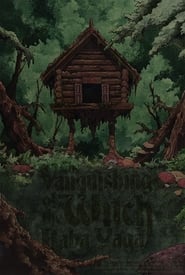
The Vanquishing of the Witch Baba Yaga
A descent into Eastern Europe's haunted woodlands uncovers the secrets, fairy tales, and bloody histories that shape our understanding of man's place in nature.
- 36

Case of Cherie
The documentary is about notorious criminal case resounded in 2009. Two young men devoted to gothic subculture were accused of cannibalism and cold blooded murder. Both convicts claim for false accusation and also that criminal case is lacking the evidence of crime. The director of the documentary got criminal case papers and presented the alternative version of this story.
- 37

Ilyenkov
The Soviet philosopher Evald Ilyenkov tries to purge Marxism of ideological cliches, but is rebuffed by his colleagues and the Soviet authorities. The struggle for a true philosophy turns into a tragedy for him and his family.
- 38
Third-class Travel
Travel the longest railway in the world. Stories and destinies of ordinary Russians who met by chance on the Moscow-Vladivostok train. A kaleidoscope of passengers' stories develops into a social portrait of modern Russian society, and the endless road turns into a metaphor of a country that is constantly moving somewhere.
- 39
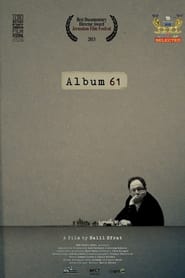
Album 61
The World Chess Championship is a juicy battle, rife with passion, power and money. Boris Gelfand has spent his entire life getting ready for this moment; he was raised to become a champion since the age of six. His father devoted all his life to cultivating Boris' talent while obsessively documenting the process. The photo albums tell the father's story as much as that of the son, revealing a simple truth about a man living his own dreams through his son under the Soviet regime. Can any child, given fine Soviet education, become a genius? And is becoming a genius worth the price?
- 40
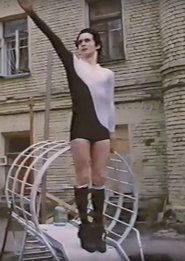
Loft-Underground
The film tells about the Moscow art underground through the history of Moscow squats. What does it mean to live today and not adjust at a time when the king of Oats took away, as it seems to us, all the fairy tales?
- 41
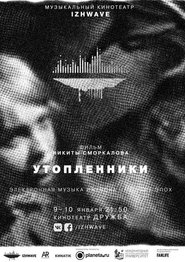
The Drowned
The film details the independent electronic scene of the 80s and 90s in the industrial city of Izhevsk (USSR). Today so called "Izhevsk electronic wave" is an important underground phenomenon in the history of modern Russian music. Appearing: "СД", "Стук бамбука в XI часов", "Красивая пришла", Rodesia, "Самцы дронта", "Организация сна", "Новые испанские кролики", Velvet & Velvet Dolls, "Вторая африканская охота", Lancer, Virgo Intacta, Birdwood, Digital Meet, "Юка".
- 42
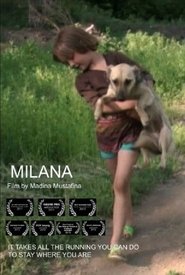
Milana
The film features the life of mother and daughter who live in the woods near the outskirts of little city in Kazakhstan. The life on the edge of civilization, making money by selling scrap metal. Other people’s everyday life exists somewhere far away.
- 43
Chronicles of revolution that didn't happen
The documentary follows Oleg, Andrey, and other long-distance truck drivers from all over Russia, who turned their outrage against the 2015 bill that required truckers to pay taxes when driving on federal roads into a 9 month long protest.
- 44
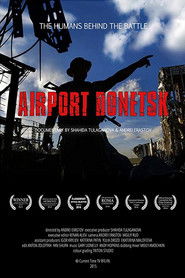
Airport Donetsk
The Donetsk Airport, Ukraine. Rebuilt in 2012, but now a scene of utter devastation - shortly after Russian-backed separatists have taken it over. Weaving together the voices of fighters on both sides supported by battle video, we tell an unvarnished story of war through the eyes of those who were there. The desperate fight for an airport whose capture seems more symbolic than strategic, they also show how human nature can adapt - in sometimes disturbing ways - when one's life is on the line.
- 45

Lisa, Go Home!
A crew of film-makers made the effort to record what reflects the generation gap between the little girl Lisa and the world of adults in her family
- 46
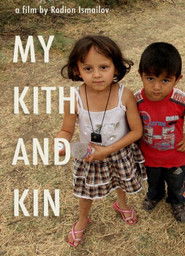
My Kith and Kin
Lolita is a bearer of two cultures, her mother is Russian, and her father is Azerbaijani. This is a subtle and piercing story about how a ten-year-old girl first travels to Azerbaijan to get acquainted with her father's parents. She wants to learn as much as possible about the traditions, culture and customs of her Azerbaijani relatives. Her first acquaintance with Azerbaijan is the subject of this documentary.
- 47

The Book of the Sea
In the frigid waters off of Russia’s Bering Strait, Inuit and Chukchi hunters today still seek out the giant sea mammals that have provided their people with food since time immemorial. It is known, that the whale hunting today is controversial and subject to international criticism and regulations. But the Inuit and Chukchi hunt is permitted by international law because of the whaling is the foundation of their culture and their life. The contemporary story of elders Aleksandr and Aleksei blends seamlessly with that of “the woman who gave birth to a whale” and other ancient myths, told here in vivid animation, in this ongoing struggle for survival and preservation of a traditional lifestyle in one of the most remote places on earth.
- 48

My Granny From Mars
The director’s granny Zina had lived in Ukraine, Russia, Belarus, and, after retirement, she moved to Crimea. Cheerful and bossy, she has always been uniting the big family. After the annexation of Crimea by Russia, visiting her has become an endless hustle. The place has turned into ‘a distant planet’, like Mars, and its environment is unfriendly towards the lonely woman. For many reasons, the time has come for her to make a crucial decision.
- 49
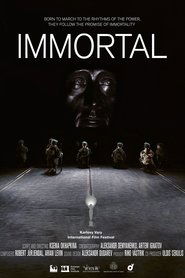
Immortal
Apatity, a far-north industrial town in Russia, first came into being as a USSR concentration camp. Although its environment is at the brink of ecological disaster, the people here still believe in the state’s promise of immortality that can be gained through sacrificial service to the fatherland. This is how the elite in a totalitarian state buy a person’s will, strength, talent and, indeed, life, turning the human being into another resource that is as faceless as a grey lump of ore. ‘I cannot fight big corporations or state structures with a film. But I hope that there is someone in the darkness of the cinema whose heart will get a bit warmer after seeing it,’ says the director. The larger part of the film was shot during the polar night.
- 50

Head, Heart and Soul
Six university professors of math and physics wanted to share the beauty of their research. They organize a competition with the hope of inspiring artists to create ground breaking pieces, based on modern science. A jury of six experts in art, fashion and architecture were invited to judge the results. One may think, that in contrast to mathematical beauty, artistic beauty can be appreciated without a complete understanding. Unexpectedly, mathematical rigor is replaced by artistic rigor; the overconfidence of scientists in the beauty of their research clashes with the modern artists world view.
- 51
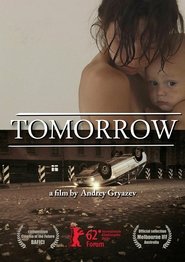
Tomorrow
Revered by the likes of Banksy and Brian Eno, the members of Russian collective Voina (War) have gained notoriety for public ‘actions’ that have landed their leaders in jail. In Tomorrow filmmaker and former ice-dancing champion Andrey Gryazev embeds himself with the group to create this fly-on-the-wall documentary focusing on Voina’s founders, Oleg Vorotnikov (known as Vor) and Natalia Sokol (known as Koza), along with their two-year-old son Kasper, who accompanies them on all of their actions.
- 52

Varicella
Seven-year-old Polina and her 13-year-old sister Nastia live and breathe ballet. Both of them are studying at the Boris Eifman Dance Academy in frigid Saint Petersburg. They’re currently awaiting their grades to find out if they’ve done well enough to be promoted to the next year, with Nastia lovingly guiding he little sister through the process. But in the meantime, Nastia also has to deal with the high demands that the academy places on its students. The gorgeously styled shots are sometimes calm, even clinical, and sometimes warm, lively and funny.
- 53

We Are Russia
About the new generation of Russian protest. Milena, Kolya and their associates are twenty years old. They grew up during the presidency of Vladimir Putin and do not know other rulers. At a time when their parents might be afraid to go to a protest rally, these young activists are ready to take risks and fight for their ideals. The year before the presidential election in 2018, the characters in the film were inspired by the calls of Alexei Navalny and took on the task of convincing Muscovites not to vote for Putin.
- 54
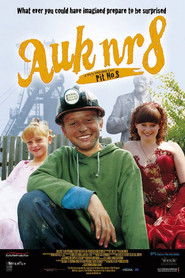
Pit №8
The eastern Ukrainian town of Snizhne, which prospered during the Soviet era when miners there were spoiled with all kinds of privileges, now lives in poverty.
- 55
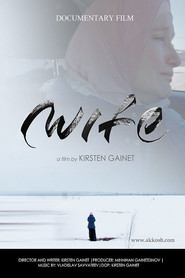
Wife
A young woman named Alfinaz, the mother of two children is going to leaving for a long journey. Husband is a life prisoner and the wife is an exemplary muslim woman and submissive to her husband. She is waiting for him and not losing hope for his release. The film tells us about a female power and submissiveness of a wife to her husband and to God. The message of the film also concerns hardships and praise to God, resignation of a woman who is destined to be a Wife.
- 56
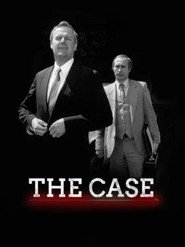
The Case
After her father’s death, the daughter of one of the forefathers of modern Russian democracy, Ksenia Sobchak, tries to understand the 18 years of his political fate. Together with the director Vera Krichevskaya she gives the word to Anatoli Sobchak’s colleagues and opponents, gets acquainted with the criminal case which annulled his career, and tries to find an answer to the question what Anatoly Sobchak’s fate would be in today’s Russia.
- 57
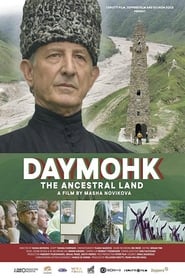
Daymohk
The film DAYMOHK tells the story of Chechen dance star and choreographer Ramzan Ahmadov, whose dance group Daymohk has found refuge with Chechnya’s current president Kadyrov. Momentarily postponing the extinction of this age-old folk dance. But the sacrifice this move takes, is great: in an attempt to save his country’s tradition, Ramzan collaborates with the authorities and sacrifices what he loves the most.
- 58
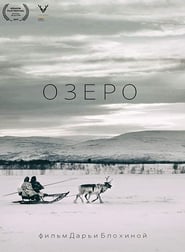
The Lake
The Filippov family live in the north of Russia, far from civilisation. Despite the lack of modern conveniences, they live in harmony with nature, create art, support and understand each other like no other people in this world.
- 59
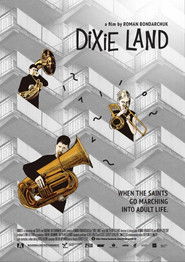
Dixieland: Little Kids Big Dreams
Little kids, big dreams and smashingly good music – Dixieland follows the amazing progress of four members of a Ukrainian children’s brass band from Kherson. Through steady practice under the wildest of conditions, Roman (12, trumpet), Polina (10, trombone, drums and many other instruments), Nikita (12, drums) and Nikita (14, piano) produce magical music with ancient, wobbly instruments. Not least due to their wit and good humor, they persevere together, helped along by their 80+-year-old conductor and a young teacher. These children of the post-Soviet provinces use American tunes to achieve their dream – to become someone in the world and make something of their lives, no matter how dire the circumstances. From the authors of an awards winning documentary film Ukrainian Sheriffs.
- 60
Blood
Documentary following a mobile blood donation team travelling through rural Russia, where people sell their blood to make ends meet.
- 61
Sasha Sokolov. The Last Russian Writer
A story about the most mysterious and, possibly, the most significant of the living Russian-speaking writers - "Russian Salinger". Sasha Sokolov is a classic of Russian literature and Russian modernism, who influenced writers such as Mikhail Shishkin, Vladimir Sorokin, Vladimir Sharov, Viktor Pelevin. True, so far little has been known about Sokolov itself.
- 62

Their Own Republic
Donbass. The fourth year of the civil war. One of the military units of the legendary battalion "Vostok". Seven days of existence between war and peace, between hope and longing, between the summer haze and autumn thaw.
- 63
The Age of Kommunalki
A unique documentary about an inheritance of communism. An hidden world: the world of Kommunalki. In Saint Petersburg a lot of different people of different ages, culture and background live together in rooms inside big flats where they share common areas as the kitchen and the bathroom. This happens for 100 years... Since the October Revolution.
- 64
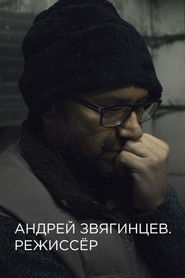
Andrey Zvyagintsev. The Director
Portrait of director Andrey Zvyagintsev against the background of the filming of his film "Loveless".
- 65
Cinemagic
Aspiring directors Lev Zaretski (a sadist) and Ruslan Romanov (an anime MC) will show you how to properly write a screenplay; cast actors; do a film shoot; and answer questions from annoying film festival attendees.
- 66
Traces in the Snow
The world's first documentary about Siberia's punk rock scene in the 1980s. It was a phenomenon of those times that this music existed thousands of miles away from the movement's epicentres in New York and London.
- 67
Breath Of Swamps
The documentary film narrates about blacklist swamps destined to drainage and life stories of its habitants. The film acquaints us with unusual beauty of swamps that save water, make the climate mild, are shelter for many species of birds and animals, as well as for the ancient legends. The film addresses the topic of swamps ecosystem devastation as a result of peat extraction. The audience will hear stories of locals about how their life and home changed by peat reclamation.
- 68
Place of Love
This is a love story. In a place that is not intended for this at all. The events of the film unfold in the day stay group of people with disabilities. And only the inner beauty and strength of the heroes of the film turn it into a "Place of Love." This is a story about all of us, about the pursuit of happiness, inner beauty, sincerity - that there are no differences between all of us.
- 69
Heel-and-toe
The police stop Anton Kuznetsov in the yard of his own house and here starts the journey of Antokha MC. One summer, one year or one friendship. Small stations from Vologda to Nizhny Novgorod, from a Russian EDM festival to an architecture exhibition in Kiev. Everything that made dozens, if not hundreds of thousands of people feel inspired with the art of this gawky, always smiling guy with a heavy backpack is not said out loud, but you can still feel it in each frame. Honesty, natural charisma, and kindness make Antokha MC not only the new hero of the music industry, but also a person, who is the main hero of this film.
- 70
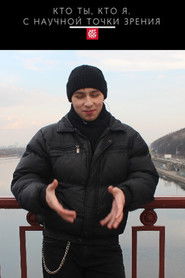
Who You Are. Who Am I. From a Scientific Point of View
He got to Kyiv from Luhansk through the Crimea. He came to us because he just had to live somewhere. Then he moved, because we could no longer be close, we could not find a common language. We are different - but have we really tried to understand each other?
- 71
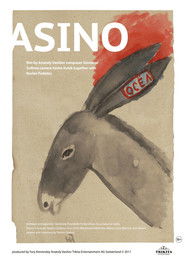
Asino
Celebrated Russian theatre director Anatoly Vasiliev's Asino (Italian for donkey) is an epic ode to this beast of burden. The donkey has a long cultural history dating back to Greek mythology and the Bible: Jesus rode into Jerusalem on one; Sancho Panza had a loyal donkey; Winnie the Pooh was friends with the dejected Eeyore. Donkeys stand for stupidity, stubbornness and humility.
- 72
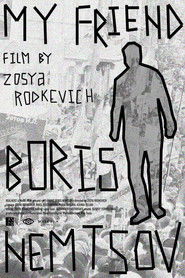
My Friend Boris Nemtsov
An intimate portrait of Russian opposition leader Boris Nemtsov — once Deputy Prime Minister and “an heir of President Yeltsin”, later an uncompromising adversary of Putin — that was assassinated near the Kremlin in February 2015. Election campaigns and hotel beds, protest rallies and office routine, train compartments and courtrooms, night walks and police vans – you have never seen any politician so close. This is a story how a journalist assignment turns into a genuine friendship.
- 73
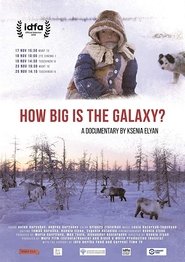
How Big Is the Galaxy?
The Zharkov family-father, mother and two young sons-belong to the Dolgan community, one of the last indigenous peoples pursuing their traditional nomadic life in the extreme north of Siberia. The children used to be sent to boarding school, where they became estranged from their family and culture, but nowadays they can get homeschooling from teachers assigned to them by the Russian authorities. Seven-year-old Zakhar and his older brother Prokopy are the protagonists in this calm, observational film. Zakhar's first year of schooling is with Nelly, a young but serious teacher. She tells him about President Putin and the importance of mathematics, and he learns classical poems by heart.
- 74
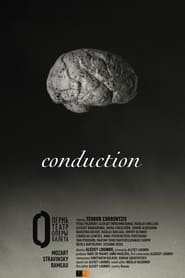
Conduction
This unconventional film is an observation Teodor Currentzis – one of the most extra-ordinary modern conductors. Backed by pieces from Mozart, Stravinsky, Jean-Philippe Rameau and with choreography by Jiri Kylian, this film is 64 minutes of love, light, life, beauty and being inside music.
- 75
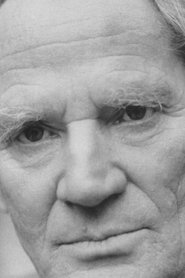
Chichibabin
The story of the outstanding poet Boris Chichibabin, whose whole life is connected with Ukraine. The film features three-dimensional photo and video footage, memories of the poet's widow, friends, and members of the legendary literary studio, which was headed by Chichibabin. Installation of the tape is made in the original form: as if the poet confirms or complements the memories of his contemporaries.
- 76
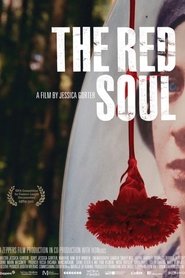
The Red Soul
More than 50 years after the death of Joseph Stalin, Russia is still divided. Was Stalin a great leader who made Russia into a superpower? Or was he a ruthless dictator, responsible for the deaths of millions of innocent people? Virtually no family has been left untouched by the consequences of Stalin’s regime, and in every corner of the country, victims’ families are struggling with history. Throughout society, Stalin’s popularity is growing, and there is a yearning for a sense of national unity. The Red Soul shows how the past lives on in present-day Russia, and thus makes its mark on the future.
- 77

Grumant: The Island of Communism
Every year, a group of Russian seasonal workers returns to bleak Barentsburg on the island of Svalbard to perform dangerous work in the mines.
- 78
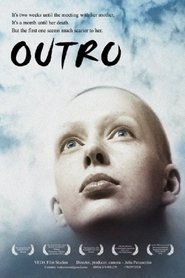
Outro
The camera is the silent witness to the last weeks before Svetlana Donskova succumbs to her illness. We follow her slow surrender. Initially cheerful in the taxi, joking about being unmarried at 30, she gradually comes to spend increasing amounts of time lying on her couch in her apartment.
- 79
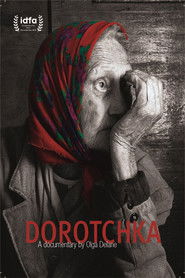
Dorotchka
In the Siberian countryside, marriage is traditionally seen as the greatest happiness for a woman. But the 80-year-old Dorotchka has always remained alone. At the kitchen table, she contemplates life, love, regret and loneliness – has she may be brought this fate upon herself? Olga Delane was born in Siberia. At the age of 16, she moved to Germany with her family. The director explores the views of Siberian people on life, love and marriage.
- 80
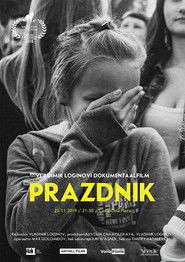
Celebration
The town of Maardu in Estonia organises an annual Ukrainian-themed festival, called 'Sorochinsky Fair' after the short story by Nikolai Gogol. More than 15,000 people come every year. This is the largest Ukrainian fair outside of Ukraine, and it has even been entered into the Ukrainian Book of Records. This festival presents life in all its vividness, variety, and unpredictability, with the beauty contest as its central motif. The protagonists of Gogol's works are transported to the modern day in all their enchanting absurdity, and they fit in pretty well. It is a kaleidoscope of incidents and viewpoints, observed with engagement and curiosity.
- 81
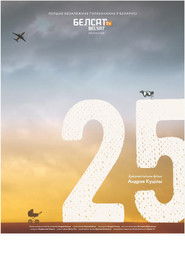
25
The Belorussian Soviet Republic got their independence 25 years ago. The sovereign state is now home to a generation aged 25 – the same age as Belarus. People call 25 the "quiet crisis age"…
- 82

Boundaries
Listening to the persistent humming sound, we follow the author on her existential journey through four cities consisting of real images and footage taken by the director’s father 25 years ago that always bring us to some visible or invisible border.
- 83
ROZSYPNE
In the summer of 2014, the village of Rozsypne, deep in the Ukrainian countryside, found itself in the midst of war and the lives of its inhabitants were unsettled by the destruction and chaos at their doorstep. But the suffering of Rozsypne only made international news after Malaysia Airlines flight MH17 was shot down, killing all 298 passengers and raining debris over the fields and homes of the village – whose name translates as ‘scattered’.
- 84
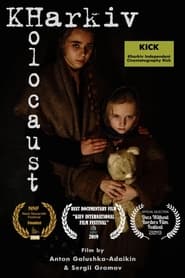
Kharkiv Holocaust
Full-length narrative-documentary film based on real events that occurred in Kharkiv and in Kharkiv region in 1941-1942. The little girl Nina is surrounded by love and care of her parents, but they still don't realize that DISASTER is waiting for them. The focus is on the story of the Ukrainian-Jewish family, who felt all the horrors of totalitarianism. The feature part of the film reveals the story of ordinary people who have witnessed the "black" pages of human history. The documentary part is an excursion into the history of the Holodomor, the Holocaust and other forms of totalitarianism in Kharkiv and in Kharkiv region.
- 85

Camp on the Wind’s Road
Following the death of her father, Belekmaa moves into his shepherd’s encampment. She is living through the first serious bereavement in her life and she hopes to see her father at least in her dreams, up to the day when, according to the Tuvan tradition, the spirit of the deceased will be sated and given an ultimate send-off.
- 86
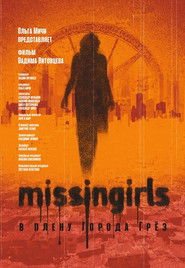
Missing Girls
The documentary looks into the fate of the girls trapped in sexual slavery. The film unfolds in India, a country that occupies an unhappy first place among countries with the highest volumes of human trafficking. Several prostitutes who became heroines of this film are living in the Red Light district of Mumbai – some time ago they were sold to this district by their own parents. The other plot line of the documentary is the story of a little girl living in one of Northern India’s poorest villages. In a couple of years she too can follow the Mumbai ladies’ path.
- 87
- 88
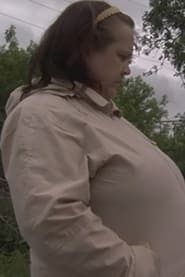
Miner's Day
The story is about a family that lives in a ghost town. 15 years ago, there was a job and a happy life here. After the closure of the mine, there were only old barracks, mountains of recycled land and unnecessary people who had lost the meaning of life. Is it possible to survive in such conditions and not sink even lower, when all moral boundaries are erased? Are these people's hopes for happiness destroyed? And is there a place for a holiday, a dream, or love in a hopeless reality? At the festival "Texture" in Perm, the tape was awarded the main prize.
- 89
The Chechen
The Chechen Ruslan Arsajev seizes every opportunity to fight against the Russians, including in Ukraine. A portrait of a displaced mercenary from the front line of the crisis.
- 90
Autumn on Shakespeare Street
Shakespeare street is a small back street in Nizhny Novgorod. It was built a century ago for the workers of the leather factory "Kozhevnik". Once a leading factory, "Kozhevnik" is no longer working now, and the inhabitants of the street struggle to find their way in the "brave new world'
- 91
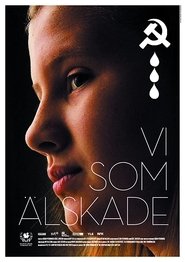
Once There Was Love
Twelve years ago Anya and Zhenya had a daughter, Nadya. They were very young, and their life soon became a problem. Zhenya ended up in jail, and Anya and Nadya ended up living with Zhenyas family. During the twelve years that have passed, Anya has done quite a lot of changes in her own and Nadya’s life, some of them involving Zhenya. The first time Zhenya went to jail – for beating Anya – he didn’t have to stay that long. But the second time he was sentenced to four years, for rape. During most of the twelve years Anya has worked with Zhenyas mother in their shoemaker’s workshop. Zhenyas father, a retired policeman, has come and gone in the shop, taken care of his granddaughter, but also had a relationship with Anya. When Sasha, Zhenya’s father, beats Anya and ends up in prison, Anya finally leaves Zhenyas family.
- 92
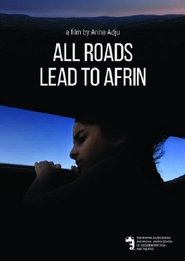
All Roads Lead to Afrin
A Russian girl, a Kurdish father. The father lives in Syria, in a town near the Turkish border. The girl joins him to meet her new family and... to find her lost roots. Everything moves forward in fragments, of time and of space. It is not only an aesthetic choice. It is a form consistent with the state of war, with the fragility of existences, with the capturing of reality by the body and by the spirit. But everything moves forward, in its way, carried along by a painful energy that obstinately perforates the borders.
- 93
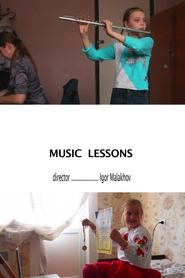
Music Lessons
Olya of nine years old is the main character of the film. Olya makes her first steps in life. The girl lives in Kyiv with her grandma and studies at music school. Olya is from Donetsk.
- 94
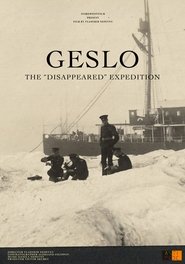
Geslo: The Disappeared Expedition
The hydrographic expedition of the Arctic Ocean (or GESLO, 1910-1915) made the last great geographical discovery – the Northern Land (then the Land of Emperor Nicholas II) and was the first to pass the Northern Sea Route from east to west, from Vladivostok to Arkhangelsk, overwintering at Cape Chelyuskin. According to Amudsen, "if this expedition had happened at a different time, it would have caused the admiration of the whole world." But in Soviet times, the most productive and successful Arctic expedition of the early twentieth century was "erased" from history. The reason is the participation of Admiral Kolchak in its organization. Unique archival materials immerse the viewer in a gripping dramatic story.
- 95
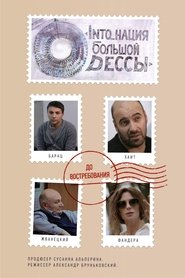
Into_nation of Big Odesa
In the world, there is a city-port Odesa, which was specially created as a refuge for people of different nationalities and religions. Humor is a special language that helps people from Odesa to communicate and get along with each other. Legends are spreading about Odesa's humor and accent. But - a paradox - people are constantly leaving it. It is loved, but it is left as a child leaves his mother. On the example of this city and its inhabitants, we wanted to understand - why people flee from their cities. We tried to find the answer taking pictures of Odesa citizens in Germany, Israel, Ukraine, Russia, Austria, France and other places. Michael Zhvanetskij, Roman Kartsev, Leonid Barats and Rostislav Khait Victor Loshak, Oksana Fandera, Valerij Todotovskij, Mikhail and Anatoly Kontush and many others are telling their stories and giving their opinions on what is the phenomenon of the ci
- 96
King of the Hill
Belarusian vlogger and young farmer Semyon, who is a deeply religious man, always loving to philosophize in relation to democracy, admire his mother and share this with the whole world. For five years now, he has been living in a village with two little sons and raise sheep. It would seem that a harmonious existence in the wilderness can not hinder anything...
- 97
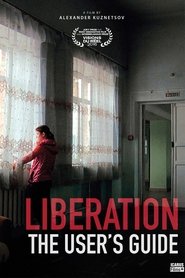
Liberation: The User's Guide
A story of the Siberian province. Girls passed directly on from orphanage to neuropsychiatric institutions are deprived of their rights as citizens: no freedom, no work, and no family. The path to reconquer these rights, in the face of fearsome Russian institutional bureaucracy, is long and difficult. At times, someone succeeds, but the new freedom is then a leap into the unknown.
- 98
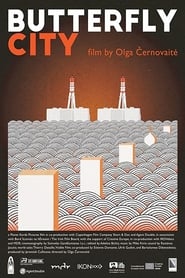
Butterfly City
The portrayal of a city that refuses to die along with its defunct Soviet-era nuclear power plant. The mainly Russian speaking citizens there face identity issues in modern Lithuania. This portrayal inevitably raises questions of democracy, inclusion, citizenship, and freedom of expression.
- 99
Intro
After the death of her son Julia seemed to be frozen. I can not regain consciousness. But she believes in a new meeting with the one she lost.
- 100
Small People. Big Trees
The Central African Republic. Here in the shade of sub-panel rainforests lives a tribe of the shortest people on Earth - the Baka pigmies. As it was hundreds years ago they hunt for meat and gather gifts of big trees. They pray to the spirits of the forest and teach their children to respect the forest, to take from it only what is of great need. But little by little their traditional mode is changing under the pressure of the "Big World" culture.