 trailers.fm
trailers.fm / Guide / Documentary + 2020s + Portuguese
Portuguese documentary films from the 2020s
The best 100 of 207
- 1

Pelé
Against the backdrop of a turbulent era in Brazil, this documentary captures Pelé's extraordinary path from breakthrough talent to national hero. Mixing rare archival footage and exclusive interviews, this documentary celebrates the legenda
- 2

Racionais MC's: From the Streets of São Paulo
Armed with music and a message, influential hip-hop group Racionais MC's turned their street poetry into a powerful movement in Brazil and beyond.
- 3
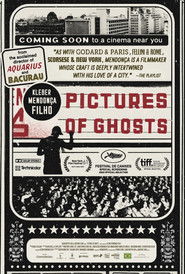
Pictures of Ghosts
Downtown Recife’s classic movie palaces from the 20th century are mostly gone. That city area is now an archaeological site of sorts that reveals aspects of life in society which have been lost. And that’s just part of the story.
- 4
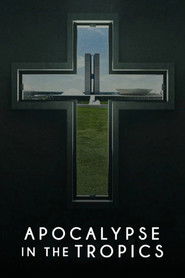
Apocalypse in the Tropics
Through deep examination, this documentary from Oscar nominee Petra Costa explores the profound impact of evangelism on Brazil's political landscape.
- 5
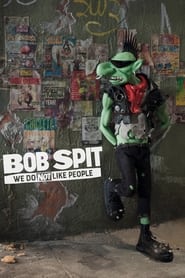
Bob Spit: We Do Not Like People
Bob Spit, a comic book character, lives in a post-apocalyptic desert inside the mind of his creator, the legendary Brazilian cartoonist Angeli. When Angeli decides to kill off Bob, the old punk leaves this wasteland and faces his creator.
- 6

Elis & Tom: It Had to be You
Elis & Tom is considered one of the most important albums in the history of Brazilian music. Recorded in Los Angeles, in 1974, it was all captured by a team of filmmakers led by director Roberto de Oliveira, who arranged for the duo to meet. The original footage was kept for 45 years until restored and remastered in 2018. The film is also an exciting reunion of the director with the artists and the material he filmed nearly five decades ago.
- 7

The Phenomenon
Featuring contributions from legendary team-mates and opponents, friends and family, this is the definitive story of Ronaldo, encompassing his meteoric rise, his spectacular fall (including one of football’s biggest mysteries) and the World Cup’s greatest ever redemption story.
- 8

Larissa: The Other Side of Anitta
Brazilian pop star Anitta reveals her most intimate world yet in this documentary that explores her dual identity, personal struggles and search for joy.
- 9
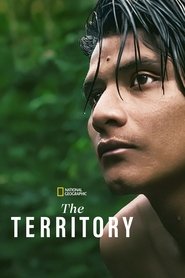
The Territory
The Indigenous Uru-eu-wau-wau people have seen their population dwindle and their culture threatened since coming into contact with non-Native Brazilians. Though promised dominion over their own rainforest territory, they have faced illegal incursions from environmentally destructive logging and mining, and, most recently, land-grabbing invasions spurred on by right-wing politicians like President Jair Bolsonaro. With deforestation escalating as a result, the stakes have become global.
- 10

Os Quatro Paralamas
Mixing archival footage and interviews with the band and its crew, this film celebrates the 40-year history of legendary rockers Paralamas do Sucesso.
- 11
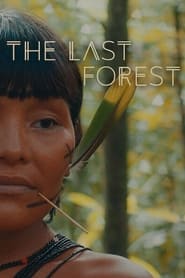
The Last Forest
In powerful images, alternating between documentary observation and staged sequences, and dense soundscapes, Luiz Bolognesi documents the Indigenous community of the Yanomami and depicts their threatened natural environment in the Amazon rainforest.
- 12
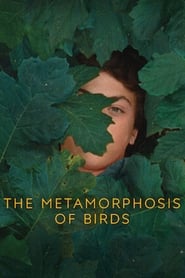
The Metamorphosis of Birds
Filmmaker Catarina Vasconcelos sifts through the memories of her ancestors. Her naval officer grandfather, Henrique, who married her grandmother, Beatriz, on her 21st birthday, spent extended periods at sea, leaving her with six children. This is the beginning of a generational saga.
- 13
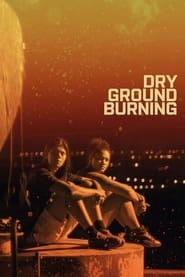
Dry Ground Burning
Just released from prison, Léa returns home to the Brasilia favela of Sol Nascente and joins up with her half-sister Chitara, the fearless leader of an all-female gang that steals and refines oil from underground pipes and sells gasoline to a clandestine network of motorcyclists. Living in constant opposition to Jair Bolsonaro’s fiercely authoritarian and militarized government, Chitara’s women claim the streets for themselves as a declaration of radical political resistance on behalf of ex-cons and the oppressed.
- 14
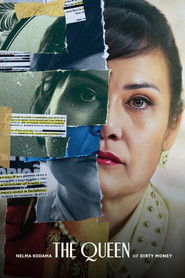
Nelma Kodama: The Queen of Dirty Money
Out of prison, notorious black-market currency trader Nelma Kodama exposes her part in a major Brazilian corruption scandal.
- 15

Salgueiro Maia - The Implicated
On April 25, 1974, a man walked alone in Largo do Carmo. He knocked on the GNR military barracks door and entered, unarmed and without any escorts. Inside, the Government’s chief, Marcelo Caetano, waited, surrounded by the military and the people. The man who stared at him that afternoon and demanded surrender, guaranteeing his safety, had just led Santarém’s Artillery 1 regiment in taking the capital. Without firing a single shot, he managed to overthrow a regime that was over 48 years old. That was the last step to take and he took it, without hesitation, becoming the unavoidable figure of the day that marked the beginning of democracy in Portugal
- 16

Vini Jr.
Vini Jr. has it all: talent, resilience and boldness. Follow his dancing, unpredictable feet on his inspiring journey to becoming a global soccer star.
- 17

2DIE4
The film follows Brazilian Formula 1 driver Felipe Nasr as he competes in a real race, capturing a story unfolding in real time.
- 18
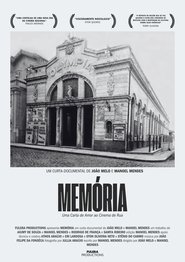
Memória
The short documentary traces the fading light of Belém’s silver screens through the eyes of a young filmmaker and aspiring historian. With camera in hand, he sets out to preserve the stories of the three movie theaters that once defined the city’s cultural pulse
- 19

The Happiest Man in the World
An intimate portrait of one of the most loved footballers; Ronaldinho. This documentary looks at his childhood in Brazil, his breakthrough to professional football and his journey to Europe including the ground-breaking years with Barcelona. We hear from his family, teammates and peers in a truly heart-warming story of one of the games greats.
- 20

God Complex: The Rise of America’s Censorship Machine
For decades, the United States stood as a global symbol of free speech. But what if that legacy is being quietly rewritten? Through expert testimony and firsthand accounts, the film raises unsettling questions about the future of truth and invites you to see what few have dared to expose.
- 21

COR
Celebrating the last show of their COR tour, the duo explore their individualities through their most intimate thoughts, documented in a real way. These reflections permeate their lives on stage, but reveal the truth behind them.
- 22

Pitty: Matriz.doc
"Matriz.doc", directed by Otavio Sousa, is a film about the making of Pitty’s album Matriz. It features behind-the-scenes footage, interviews with collaborators, and visits to key locations in Salvador, Bahia, connected to the artist’s early career. The documentary explores the creative process and the cultural influences that shaped the album.
- 23

D'Ale Para Sempre
Almost every story has a beginning, middle and end. But this is different. We live a lot from the reception at the airport to the final tango of our conductor. What we built together was unique. And it will never end.
- 24

Pitty: Casulo Musical
"Casulo Musical" is a documentary that explores Brazilian rock artist Pitty’s creative process during a unique musical project born in pandemic lockdown. The film follows collaborative songwriting sessions with various artists in her home studio and showcases the making of her 2022 EP Casulo, released alongside her new label of the same name. Divided into four episodes, it highlights the EP’s production during a Twitch channel series in 2021
- 25

Voo 168: A Tragédia da Aratanha
40 years ago, a small town in the northeast of Brazil was haunted by one of the biggest accidents in Brazilian aviation. From memory to mourning, the documentary revisits these memories from unpublished testimonies of those whose lives were marked by the tragedy that shocked the country.
- 26

O Apóstolo do Brasil - A Missão de São José de Anchieta
The story of Joseph of Anchieta , the Jesuit missionary who forever changed the history of Brazil
- 27

Um Retrato de Teresa
The journey of spiritual growth of Saint Therese of the Child Jesus, or Saint Therese, which began within her pious family and continued until her last moments as a Carmelite nun.
- 28

Strive, Strive, Strive
Documentary film about the Brazilian football club Atletico Mineiro, but also about something intangible: football, its emotion and imperishable spirit.
- 29

Ocupadas
In the month of May, the Soberana collective interviewed mothers who fight for women's rights in squatting from the Olga Benário Movement. In three squatting locations across three different Brazilian regions, they shared stories from three different women
- 30

- 31

Todo Dia é 4 de Novembro: O Fluminense Conquista a América
Fluminense's historic Copa Libertadores campaign told by its protagonists. Behind the scenes of the conquest, from the tournament's debut to the top of America. An honor to remember forever.
- 32

Digest Diversity
Experimental short-film made by brazilian students about the trópicalia and cinema novo movement. The narrative revolves around the song Géleia Geral from the album Tropicália ou Panis Et Circensis and also around the political, artistical and social time from that period.
- 33
Pitty: Admirável Chip Novo (Re)Ativado
"Admirável Chip Novo (Re)Ativado" is a short documentary celebrating 20 years of Pitty’s groundbreaking debut album. It features reflections on the album’s legacy and includes personal testimonials from the guest artists who reinterpreted its songs, highlighting the continued relevance of its themes like identity, rebellion, and technology.
- 34
Linha de Frente Brasil
The film also recorded the beginning of the pandemic in China through the lens of international correspondent Marcelo Espíndola, roasting in São Paulo, Santos, Manaus and Pará. As well as Dr. Roberto Eballos (Doctor and Master in Immunology), Dr. Gustavo Pasquarelli (Infectious) and 23 other health professionals.
- 35

A Colisão dos Destinos
From childhood to the presidency of Brazil, the documentary follows Jair Bolsonaro’s trajectory, tracing his background, military career, and the path that led to his political rise.
- 36

Exportação Vergonha
- 37
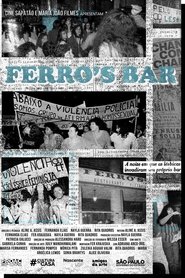
Ferro's Bar
From the accounts of lesbian artists and militants, frequenters of Ferro's Bar, we are led to an episode central to the formation of the Brazilian lesbian movement in the early 1980s, the "uprising of Ferro's Bar". The film shows how lesbians are no longer a figure found only at night, inside apartments, and become a political subject that rises up against censorship of one of the lesbian periodicals with the largest circulation in the 1980s, "ChanacomChana". Ferro's Bar represents a space for the political-affective memory of its frequenters and a way of updating this collective and political history that is still pulsating.
- 38

Life Won't Last Forever
Two cassettes are found in the old studio. Nothing is known about the artist. His music is played at parties and broadcast on the internet. Twenty years later, José Pinhal becomes one of the biggest myths of Portuguese popular music.
- 39
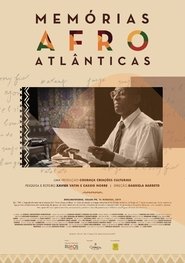
Memórias Afro-Atlânticas
The story of the black American linguist Lorenzo Dow Turner, responsible for recording and photographing the Candomblé terreiros, in Bahia, between 1940 and 1941, generating an unprecedented collection.
- 40

Depois Daquele Dia
In January 2013, a fire at Boate Kiss killed 242 people in Santa Maria. Luciane, who is the sister of one of the victims, reflects on the impacts and the learning that the tragedy brought for herself and the city.
- 41
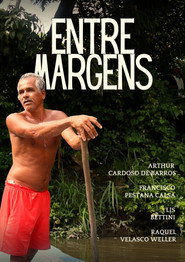
Between Shores
Amid the chaos of the city of Recife, the boatman known as “Pai” earns his living from the Capibaribe River, keeping alive the age-old route that connects the working-class neighborhood of Iputinga to the upscale area of Poço da Panela.
- 42

A Bolsa ou a Vida
In the post-pandemic future of covid-19, will the centrality be the financial casino and the accumulation of wealth by an elite or a quality life for all, with less inequality? Did the minimal state show itself capable of serving the collective? How to guarantee life without social and labor rights? What model of society do we want to live in? The film addresses the dismantling of the concept of social welfare and makes us reflect on the incompatibility of neoliberalism with a humanist project of society.
- 43
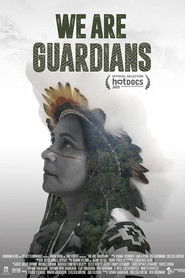
We Are Guardians
In this expansive character-driven exposé, Indigenous guardians of the Amazon rainforest in Brazil fight to protect their territories from the ravages of extractive industries, confronting deforestation by illegal loggers, corrupt politicians and profit hungry global corporations.
- 44
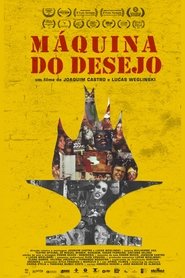
Desire Machine: 60 Years of Teatro Oficina
In six decades, Teatro Oficina has done more than revolutionize theatrical language in the country: the aesthetic influence of José Celso Martinez Corrêa's company extends from Tropicalism to the renewal of Brazilian audiovisual languages from the 1960s onwards. The film revisits a story that it involves personalities such as Caetano Veloso, Glauber Rocha, Lina Bo Bardi, Chico Buarque and Zé do Caixão, brings together scenic art, ecology, architecture and sexuality, and mixes art and life in the search for a Brazilian based language.
- 45
Quadro Negro
Sixteen young black people talk about the experience of going to university in Brazil after more than a decade of affirmative policies in education.
- 46
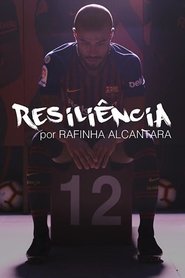
Resiliencia por Rafinha Alcantara
The documentary follows the midfielder’s everyday life for six months. It’s a sincere portrayal by Rafinha himself, who opened his home for the cameras to film every moment, even allowing them into the operating room.
- 47

Operation Camanducaia
The film tells the story of 93 boys who were arrested in São Paulo and taken to Minas Gerais during the Military Dictatorship.
- 48

Tomorrow Has Come
Nothing nor anyone can escape the impacts of climate change. People from all corners of Brazil, our cities and forests, our economy, our health and our dreams for the future. Six Brazilians, from five different states, tell how climate change has affected their lives. A young indigenous woman who became the leader of a volunteer fire brigade after an unprecedented forest fire; a small farmer who faced six years of drought; a centenarian caiçara community forced to move due to the advance of the sea; a retailer who saw his shop destroyed by rains and landslides that claimed hundreds of lives in Rio de Janeiro; an oyster farmer who suffered harsh losses due to rising sea temperatures; a woman from a coastal city who lost two cars to storm tides which are happening more and more often along the Brazilian coast.
- 49

I Love You, I Leave You
After more than twenty years, Swiss musician Dino Brandão travels to Angola to give a concert in his father's home country. Confronted with his family's past and questions about his own identity, Dino is triggered into a manic episode.
- 50
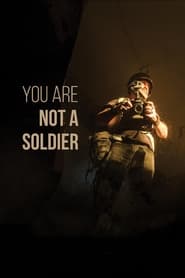
You are Not a Soldier
As filmmaker Maria Carolina Telles comes to terms with the death of her father, a man who regretted never making it to the frontlines of World War II, she focuses her lens on the life of another man who had his own unique experience as a civilian in the midst of combat: award-winning war photographer André Liohn.
- 51

Faith in Prayer
The medium-documentary entitled "Faith in Prayer" is a dive between the Faith and the spirituality of three praying womans living in the hinterland of Itaparica.
- 52
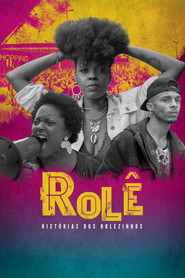
Rolê - Stories of Brazilian Protests in Malls
Protests against the violence of security guards and shopping mall employees in Brazil have mobilized thousands of people in recent years. This form of protest showed the barriers imposed by racial discrimination and social exclusion. Follow in this documentary the lives and memories of three black characters that went through traumatic racism situations and took part in the protests which recently took place in shopping malls. Discover the dreams, beauty, poetry, art and politics of a generation that has found new ways of dealing with violence by promoting an intense debate across the Brazil about how black lives matter.
- 53
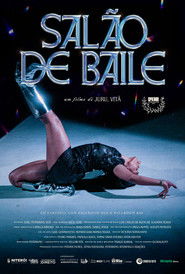
This Is Ballroom
In Rio de Janeiro City and its outskirts, LGBTQ+ youth of color recreates Ballroom culture on their own terms. A portrait of the dramas, the voguing performances, and the art of shade, 50 years after its inception in New York. Rio is burning!
- 54

O Artista e a Força do Pensamento
THE ARTIST AND THE FORCE OF THOUGHT, reflects the relationship between balance and imbalance within the partiality of movement of the dancer Marcos Abranches. It oscillates the body to wake up from the emptiness and isolation caused by the imbalance. The movement's lack of aesthetics is felt by abandonment and rejection, understanding that relief is in the support of love. Investigating body movement in a world without anguish, without pain, without despair. Search for life. Find in dance the balance of the body and the beauty of the soul.
- 55

Éramos em Bando
The film accompanies Grupo Galpão during a period of social isolation. The actresses and actors were prevented from debuting in the theater for the 25th edition of the company, due to a worldwide pandemic for ten days for a first artistic experience in the virtual environment.
- 56
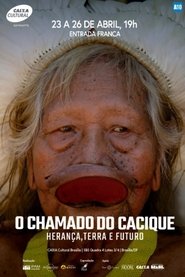
The Chief's Call: Inheritance, Land, and Future
Through personal stories, interviews, and images captured in the Piaraçu village during the event "The Call of Chief Raoni," we discuss the importance of standing for indigenous rights and environmental protection arising from their presence in the territories as a fundamental part of efforts towards a balanced climate.
- 57

Conversations with Ruth de Souza
Ruth de Souza inaugurates the existence of black actresses on stage, television and cinema in Brazil. She carries within her the genesis of an important part of the achievements for black women over almost a century of life. At the age of 95, surpassing 70 in her career, amidst reflections and memories, a dialogue was born between two generations of black artists, Ruth and the director.
- 58
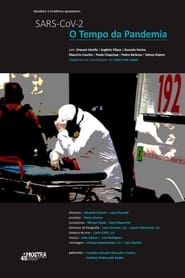
Sars-CoV-2: O Tempo da Pandemia
Seven doctors and public health specialists accept the mission to fight the pandemic, working voluntarily. This unforeseen task in the careers of Paulo Chapchap, Maurício Ceschin, Gonzalo Vecina, Drauzio Varella, Sidney Klajner, Eugênio Vilaça and Pedro Barbosa is commented on by them. In addition to following this committee, the documentary brings reports from frontline professionals, working in São Paulo and Manaus, about the experience of going to Covid-19 to take care of patients and the elderly.
- 59
Serráqueos
Documentary aims to demonstrate the simple life of older residents, as well as people in love with Serra do Itapeti. Turn your eyes to the Serra's problems and virtues, and discuss solutions capable of preserving it.
- 60

Arreda Homem Que Chegou Mulher
Documentary about terreiro women in Fortaleza who occupy the highest positions in the hierarchy, subverting the patriarchal tradition of religious communities.
- 61
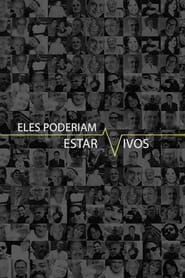
They Could Be Alive
What would the pandemic have been like in Brazil if the government had used all the potential that the SUS (Brazilian Federal Health System) offers? What could the country's 300,000 health workers have done to combat the uncontrolled transmission of the virus? How many deaths would have been avoided if we had done contact tracing, mass testing and invested in effective prevention and awareness campaigns? How many children, wives, husbands, mothers, fathers and brothers would have lost the most important people in their lives if the president of the republic had not bet on the strategy of intentional contamination to generate collective immunity, despising vaccines and betting on charlatanism (and corruption)?
- 62

Infinite Elza
The movie-documentary "Elza Infinita" follows the journey of singer Elza Soares. Its starting point is the musical Elza and the artists who were part of the cast, as they talk about Elza’s life and their own personal experiences.
- 63
Oxente, Bixiga!
Nordeste is a fiction, sang Belchior in São Paulo. If the paulista and the northeastern are inventions elevated along a path, they are also the shapers of cities carried in the body of everyone who comes and everyone who goes. The documentary looks at the presence of many northeasters, in this region called Bixiga, known for its Italian presence, claimed in its black and indigenous memory.
- 64
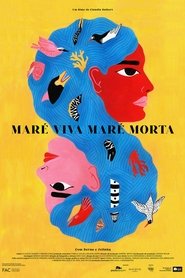
Maré Viva Maré Morta
The documentary takes us into the worlds of Berna and Zélia, two women who care for different marine conservation units. Beyond the obvious need to preserve these environments, we delve into their stories, relationships, and daily lives. The changing tides reveal courage, warmth, death, and life. After all, do these places need them, or do they need these places to survive?
- 65
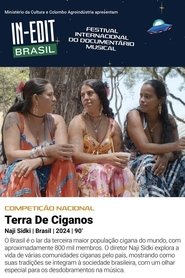
Terra De Ciganos
Brazil is home to the third largest gypsy population in the world, with approximately 800,000 members. Director Naji Sidki explores the lives of several gypsy communities across the country, showing how they preserve their traditions while integrating into Brazilian society, with a special look at their developments in music.
- 66
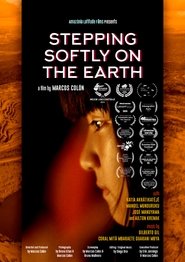
Stepping Softly on the Earth
In the documentary "Pisar Suavemente na Terra," three Indigenous leaders from the Amazon try to keep their ways of being in the world alive. This is the story of Kátia, chief of the Akrãtikatêjê people, of Manuel, chief of the Munduruku people and of José Manuyama, a teacher of Kokama origin. The three narrate the threats to their territories promoted by large-scale mining, monoculture, oil extraction, logging and the construction of hydroelectric plants. Interconnected by the voice and ancestral thoughts of Ailton Krenak, these accounts of resistance present us with other ways of existing and walking in the world.
- 67

The Presence of the World in Me
On the edges of their bodies, between the fragility of existence and its desiring intensities, three brazilian artists are transmuted with each performance. Their works question the limits we set in and for our own bodies.
- 68
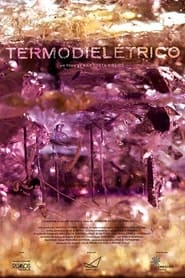
Thermodielectric
In this visual essay, Ana Costa Ribeiro uses personal archives to delve into the adventurous, relatively short life of her grandfather Joaquim da Costa Ribeiro, a pioneer in experimental physics in Brazil in the middle of the last century. He was the discoverer of the thermodielectric effect: “something to do with lightning,” as it was explained in a child’s terms to his granddaughter.
- 69

Todos os Olhos
Dive into the inventive universe of Tom Zé. Through intimate interviews with artists, family members and longtime collaborators, the film retraces the singular trajectory of one of Brazil's most original musical minds. The documentary brings together voices that reflect on his boundless creative unpredictability, highlight the technical mastery behind his sonic experiments and portray his music as the result of an expansive creative process, where ideas unfold like "pills of sound".
- 70

Neirud
Neirud died shrouded in mystery, leaving behind no trace of her past. Confronting family secrets, the filmmaker pieces together the life of her enigmatic aunt, who toured Brazil as a wrestler in an underground all-female circus troupe throughout the 60s and 80s. As she investigates Neirud's controversial ring persona, Gorilla Woman, the filmmaker uncovers a taboo-breaking love story, revealing the surprising nature of Neirud's role in her own family.
- 71
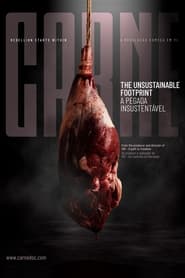
Carne: The Unsustainable Footprint
It's a documentary about the consequences of our eating habits for the planet, our health and in animal well-being. Filmed in several countries: Portugal, Belgium, France, UK and Lebanon. It gives global insights about the problem.
- 72

Desova
Documentary about the poor people who are murdered by the state and made to disappear, and how their families deal with it.
- 73
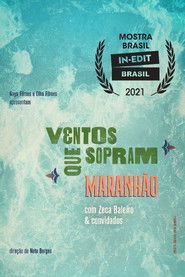
Ventos Que Sopram Maranhão
Zeca Baleiro guides us on this musical journey to his home state. With testimonies and performances by local artists from different musical genres, we discover a pulsating and little explored sound panel.
- 74
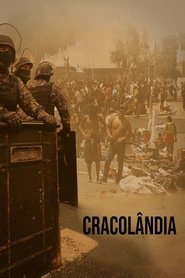
Cracolândia
Based on intense research - and seen through different realities, that of those who study it, that of those who try to contain it and that of those who live in it -, the film opens a debate about the largest and most impacting scene of crack use in an open area of the world: Cracolândia, in São Paulo. The work analyzes the causes of this evil and its progressions, in addition to the combat tactics already carried out in São Paulo, opening a parallel with those applied in other countries.
- 75

De Onde Viemos, Para Onde Vamos
Identity conflict, loss of traditional ways of life and resistance. Past and present in current experiences. Documentary about the Iny people, who live in the village of Santa Isabel do Morro, on Bananal Island, Tocantins. Meanings and tensions between the recovery of the original traditions of leaders and elders and the incorporation of white culture by indigenous youth. Processes of experiences and memories: dismay and resistance in facing the Iny identity. Delicate record of different imagery views in the intertwining between indigenous filmmaker and the film's director.
- 76
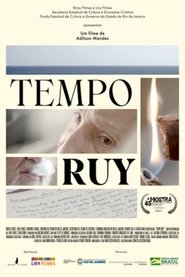
Tempo Ruy
A documentary about the work of filmmaker, screenwriter, actor and film director Ruy Guerra. The audiovisual collage presents the director's trajectory, from his first experience with cinema up to his most recent thoughts on his work.
- 77
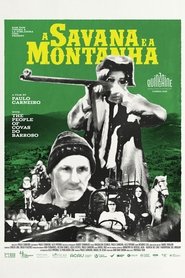
Savanna and the Mountain
The community of Covas do Barroso, in northern Portugal, discovers that the British company Savannah Resources plans to build the largest open-pit lithium mine in Europe just few meters from their homes. Confronted by this imminent threat, the People decide to organize themselves and expel the company from their lands.
- 78

Wellington's First Line
The historical events of the french invasions that took place in the three portuguese municipalities of Mealhada, Penacova and Mortágua.
- 79

Kmêdeus
The intriguing story of a mysterious homeless eccentric called Kmêdeus (EatGod) who lived on the island of São Vicente, Cabo Verde. To some he was a lunatic, to others an artist. But to all, he was and still is a mystery. António Tavares, an important contemporary dancer from Cabo Verde, made an exceptional performance piece based on the life and inner worlds of Kmêdeus. He takes us on a trip through his hometown of Mindelo, the island's music and films, and the celebration of the its annual carnival. It thus becomes a search for the root aspects of one of the oldest Creole communities in the world. Kmêdeus was made by the Cape Verdean film collective Negrume.
- 80
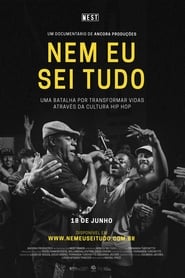
N.E.S.T
A collective born by the love for Hip Hop culture, in one of the most contradictory places of all. They tirelessly seek to foster and strengthen this culture in the region, taking their name all over on Brazil and the world. Facing all kinds of prejudices, together, they persist in the battle to be better for others. Because they believe that culture is not about what we like, but what can really change lives.
- 81
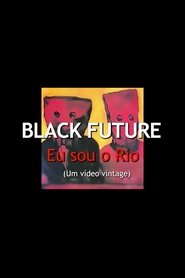
Black Future, Eu Sou o Rio
"Eu sou O Rio", debut album by the band Black Future, appeared on all lists of the best releases of the year it was released, in 1988. A critical success, the band presented a sound that mixed post-punk with "malandragem carioca", but almost no one heard it. To date, there has never been a reissue and is not even available on streaming services. With interviews carried out in celebration of the twenty years since the release of this obscure success, its former members and people close to them break down the history of the band and the album.
- 82

Who Is Afraid?
The rise of the extreme right in Brazil from the perspective of artists whose works were censored.
- 83

Divinely Evil
In a salmon-coloured drawing room, a writer of sadomasochist literature now in her seventies narrates her turbulent, sexually explicit life story, once as her pseudonym and once as herself. What makes up a true biography, the real or the im
- 84

Playtime
Brazil from the perspective of school pupils aged 14 to 19. Combining a documentary with a fictional approach, Hora do recreio addresses topics including violence, racism and drug dealing.
- 85
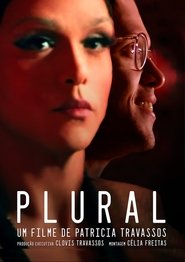
Plural
PLURAL is a journey through the intricate construction of identity. Guilherme Terreri and Rita Von Hunty unfold to explore the fluid boundaries of the integral self and human expression.
- 86
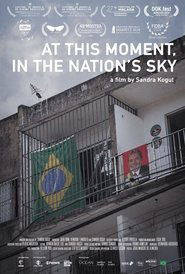
At this Moment, in the Nation’s Sky
The documentary closely follows the turbulent months of the electoral period that culminated in the invasion of the National Congress, the Planalto Palace and the STF on January 8, 2023.
- 87

Aprender a Sonhar
Thanks to affirmative action quotas, Black and Indigenous students are able to attend college and bring their ancestral knowledge with them, in a story of overcoming adversity and social transformation.
- 88

Art of Splatter: A Journey Into the Entrails of Brazilian Goregrind
Documentary about the brazilian goregrind movement
- 89

Alcindo
On June 10, 1995, to celebrate the Day of the Race and Sporting’s victory in the Portuguese football cup, a group of Portuguese ethno-nationalists went to the streets of Bairro Alto (Lisbon) to beat up Black people. The official outcome was 11 victims, one of which died.
- 90

- 91
The liberation
After 102 years of history, Corinthians reaches the most anticipated final since its birth: the Copa Libertadores de América. 10 years later, the film portrays the feeling of the 'Fiel' fans, between sleepless nights of anxiety, adventures through South America, distrust, the lump in the throat, all the feelings that only those who lived with Corinthians in that 2012 went through until they were capable of letting out the champion cry.
- 92

In Search of Cruzeiro's History
The documentary "In Search of Cruzeiro's History" explores the beginnings of Società Sportiva Palestra Italia, a team founded in Belo Horizonte by Italian immigrants in 1921. From its origins to becoming Cruzeiro Esporte Clube and winning the first Brazilian championship in 1966, the documentary features interviews with former players, historians, and fans, among others. The film is a production of the Palestra Italia Institute in partnership with the Vivas Institute and lasts 60 minutes.
- 93

The Uninhabitable Ones
A dance group rehearses for their latest performance Inabitáveis about black homosexuality. While the choreographer conducts research and gives guided tours, he meets Pedro, a young trans girl looking for her own means of expression. She desperately wants to be taught by him.
- 94
Movido A Futebol
Evinho Bonfim had spastic cerebral palsy at birth. Mobility difficulties did not stop him from loving football and Milan. That's how, at the age of 14, he founded Milan dos Coelhos. For more than two decades, Coach Evinho's project has helped to change the reality of children and young people in the Coelhos neighborhood, in Recife. The documentary shows how a lowland team survives in the face of a lack of sponsorship and how the coach is inserted into society through football.
- 95

Tempo
- 96

Amora
- 97

Distopia
Over the course of thirteen years, from 2007 to 2020, the film follows the changes in the social fabric of the city of Porto. Demolitions, evictions and resettlements that affect the Roma community of Bacelo, the inhabitants of Bairro do Aleixo and the sellers at Feira da Vandoma.
- 98

Republic of Judges
Republic of Judges presents a panorama of central events in Brazilian politics from recent decades, such as the Constitution of 1988, the Mensalão Trial and the Car Wash Operation, to analyze the phenomenon of the recent participation of the Judiciary power in the current power framework in the country.
- 99

Mandinga
Bluesman André Christovam is one of the most prominent names in the genre in Brazil, and his debut album, "Mandinga" (1989), is regarded as the best-selling blues album in the country. In this film, André and others involved in the album's production share how it was conceived, produced, and recorded, as well as its impact at the time.
- 100
Ãjãí: o jogo de cabeça dos Myky e Manoki
Ãjãí is a fun game in which only the players' heads can touch the ball. This practice, shared by few indigenous peoples in the world, is present among the Myky and Manoki populations of Mato Grosso, who speak a language of an isolated linguistic family. of the villages. But to organize this great party, your young bosses will face some challenges ahead.